Metal Livestock Sheds: Sourcing, Design, and Construction Guide
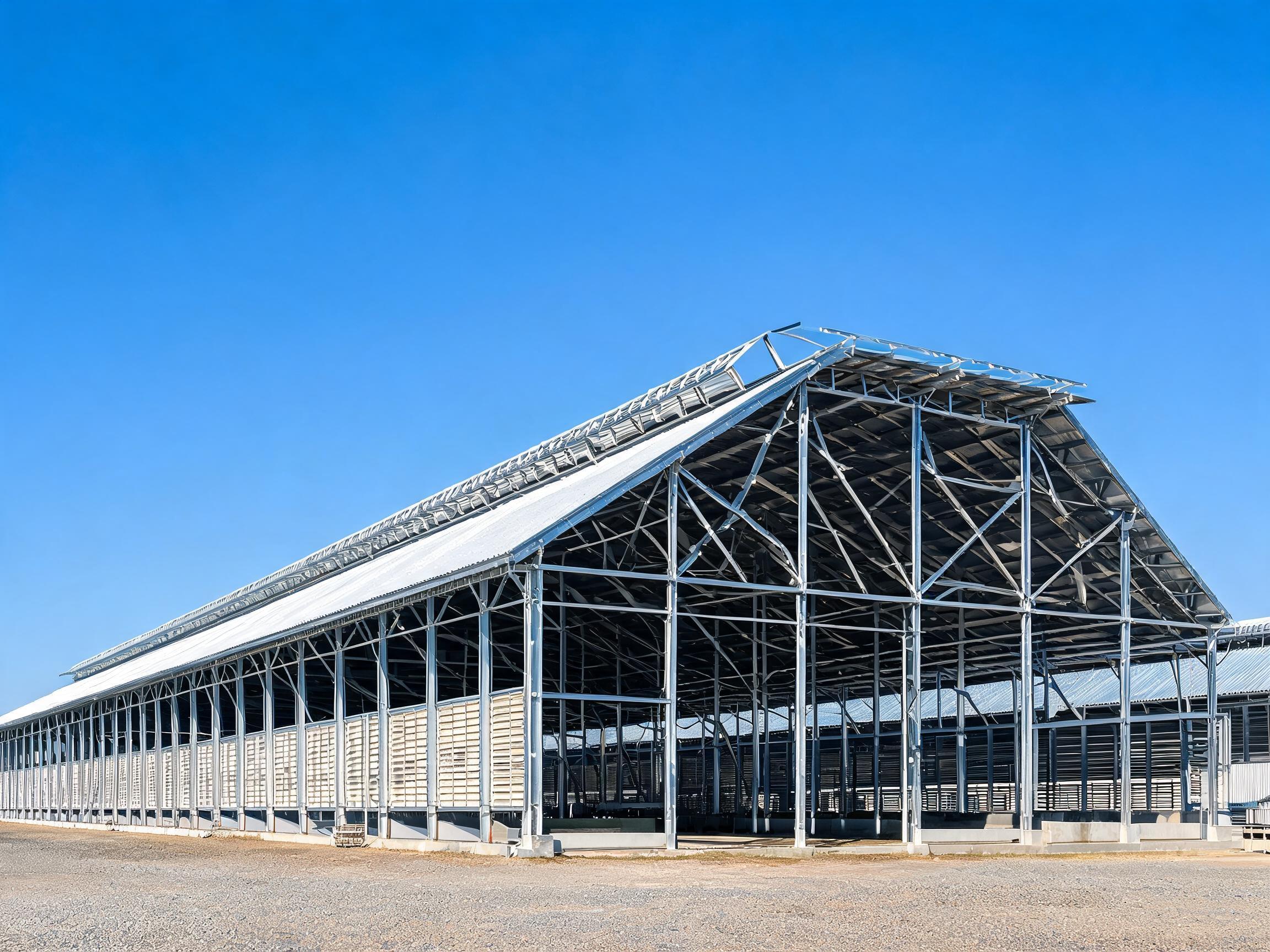
When farm operators, agricultural investors, and livestock project developers search for metal livestock shed, they need a manufacturer that delivers complete metal livestock shed systems-engineered for animal welfare, climate resilience, and long-term corrosion resistance. A metal livestock shed is not simply a steel building with a roof; it is a purpose-engineered agricultural structure that integrates ventilation, biosecurity, waste management, and climate control into the structural design. Jidian Construction Materials Co., Ltd. manufactures custom-engineered metal livestock sheds from its facility in Xiamen, Fujian, China. The company holds the China Steel Structure Manufacturing Special Level Qualification-the highest grade in China's fabricator classification-and produces 360,000 tons of steel structures annually. With 2,000+ completed projects across 50+ countries, Jidian delivers galvanized steel livestock sheds for dairy and beef cattle, pigs, poultry, and multi-purpose agricultural applications, using Q355B welded H-section steel hot-dip galvanized at ≥275g/m² per ISO 1461 for ammonia-rich farm environments.
Why Galvanized Metal is Essential for Livestock Sheds
Livestock environments are among the most corrosive environments for steel structures. Animal waste releases ammonia, hydrogen sulfide, and moisture that attack steel surfaces aggressively. Painted steel in livestock sheds typically shows corrosion within 3–5 years, requiring costly repainting and structural repair. Hot-dip galvanized steel provides fundamentally different and superior protection:
| Factor | Hot-Dip Galvanized (≥275g/m²) | Painted Steel |
|---|---|---|
| Protection mechanism | Sacrificial zinc layer bonds to steel metallurgically | Barrier coating that can peel or chip |
| Ammonia resistance | Excellent-zinc is resistant to ammonia | Poor-paint degrades rapidly |
| Service life in farm environment | 20+ years | 3–5 years before repainting |
| Edge and corner protection | Complete-zinc coats all surfaces including cut edges | Incomplete-edges are weak points |
| Maintenance cost over 20 years | Minimal | 3–4 repaint cycles, significant cost |
| Animal safety | No paint chips to ingest | Paint flakes may be ingested by animals |
For livestock operations, the higher initial cost of galvanizing is offset by decades of maintenance-free service. Jidian galvanizes all primary steel components at ≥275g/m² per ISO 1461, providing 20+ years of protection in ammonia-rich environments.
Livestock Shed Types and Applications
Jidian manufactures metal livestock sheds for various animal types and production systems:
- Cattle shed (dairy and beef): Portal frame design with 18–30m clear spans, 4–9m eave heights. Pre-engineered for freestall layouts, feed alleys, and manure management systems. Key product: Prefabricated galvanized steel Structure Cow Shed.
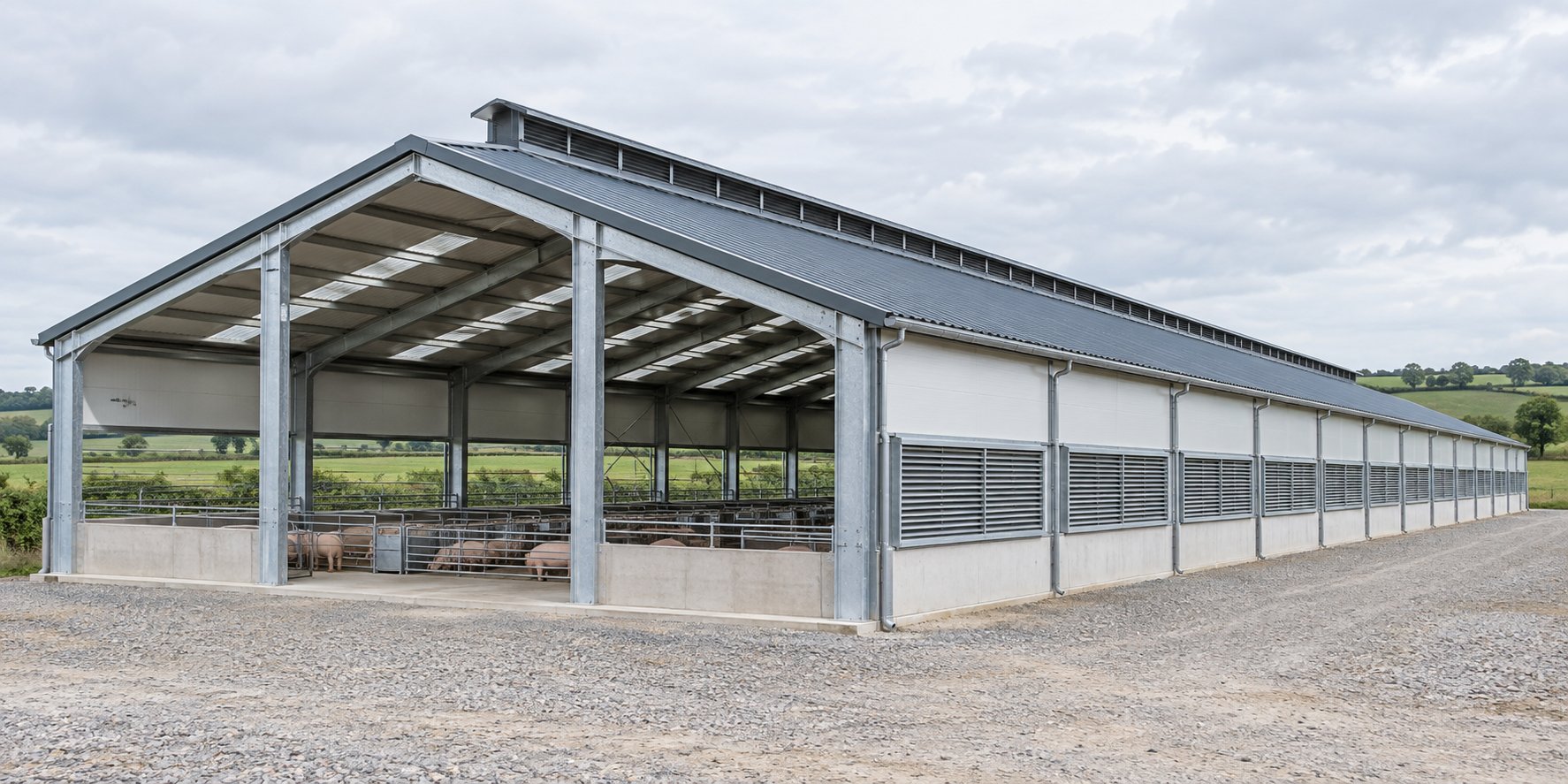
- Pig shed (farrowing, nursery, grow-finish): Portal frame Q355B H-section steel, 15–30m clear spans. Tunnel ventilation ready design. Engineered for slatted floors and waste management systems. Key product: Prefabricated galvanized steel structure pig shed.
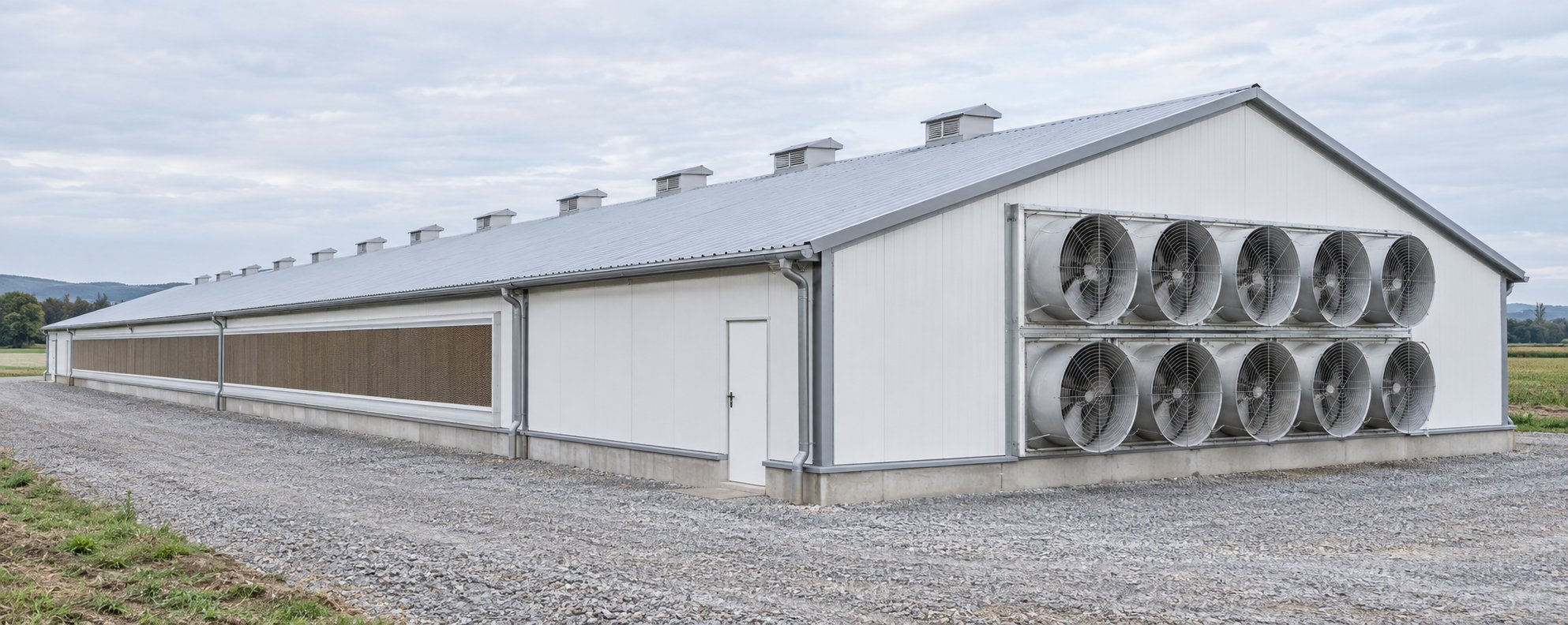
- Poultry house (broiler, layer, breeder): 12–24m clear spans for cage systems and feed alleys. Fan mounting frames and cooling pad openings pre-engineered. Insulated cladding reducing temperature fluctuation by 8–12°C. Key product: Prefabricated galvanized steel structure chicken shed.
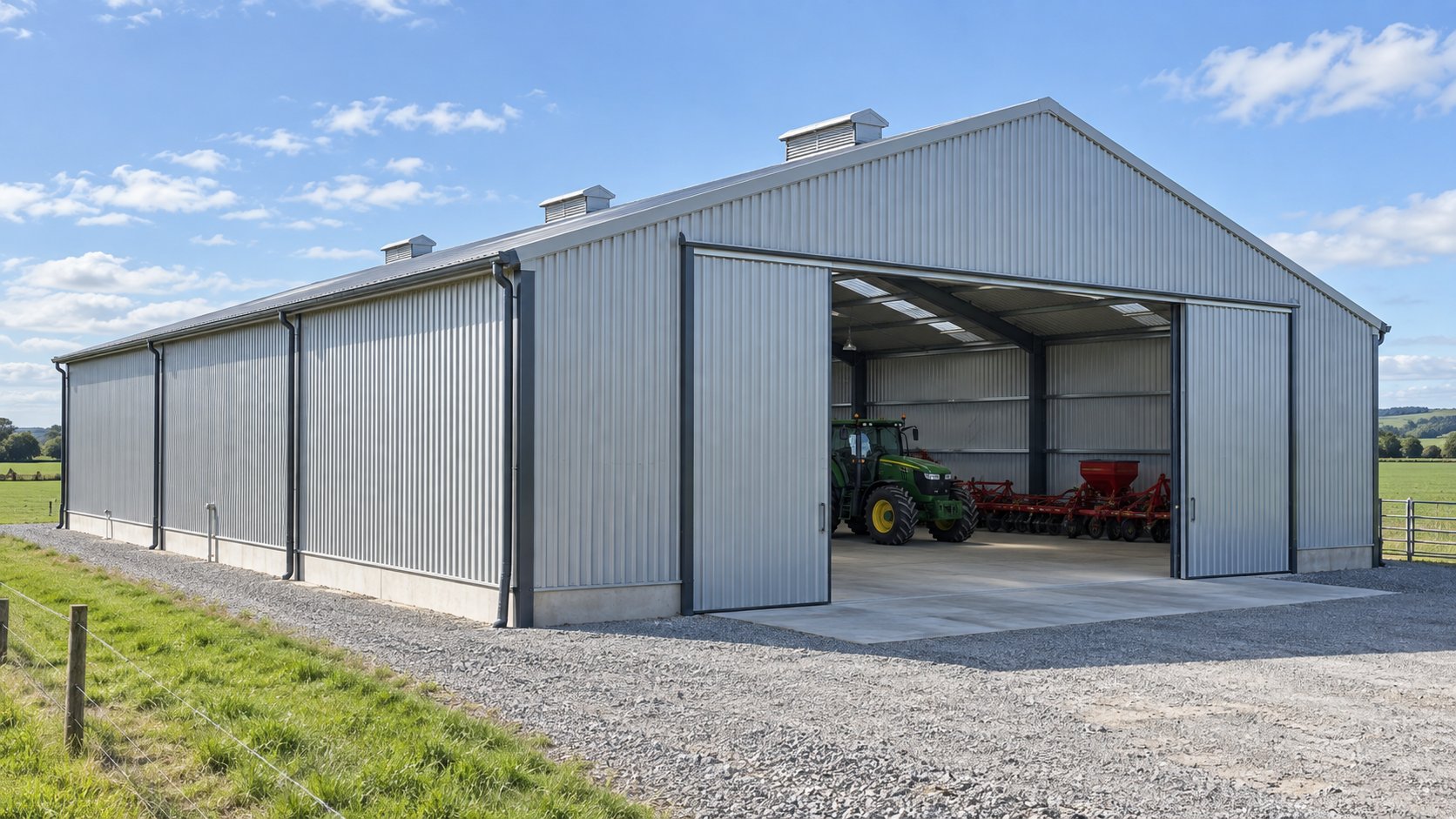
- Multi-purpose agricultural shed: Light steel frame, 12–24m clear spans. Suitable for equipment storage, crop storage, or general farm use. Key product: Agricultural light steel farm shed building.
Each shed type is custom-engineered to your herd size, climate zone, ventilation strategy, and local building code. Specify your livestock type and production system during inquiry.
Ventilation Design: The Critical Factor in Livestock Sheds
Ventilation is the single most important design factor in metal livestock sheds. Poor airflow leads to heat stress, respiratory disease, reduced feed conversion, and increased mortality. Jidian pre-engineers ventilation infrastructure into the structural design:
- Tunnel ventilation: Exhaust fans at one gable end pull air through cooling pads at the opposite end, creating uniform airflow. Effective for hot climates. Fan mounting frames and cooling pad support openings are pre-engineered into the gable framing.
- Cross-flow ventilation: Side wall curtain systems and ridge vents allow natural cross-ventilation. Suitable for temperate climates with moderate temperatures.
- Ridge ventilation: Ridge vents at the roof peak allow hot, moist air to escape naturally. Used in combination with side wall openings for natural ventilation strategies.
- Insulated cladding: PU/EPS panels (50–100mm) reduce indoor temperature fluctuation by 8–12°C, protecting animals from extreme heat or cold. Critical for dairy operations in hot climates where heat stress reduces milk production.
Provide your climate data (temperature range, humidity, prevailing wind direction) and ventilation strategy during inquiry. The structural design accommodates your ventilation equipment, ensuring proper airflow without structural interference.
Biosecurity and Waste Management Integration
Modern livestock sheds must integrate biosecurity and waste management features into the structural design. Jidian's designs accommodate: separation of clean and dirty zones (structural layout supports internal partition walls separating clean and dirty traffic paths, preventing cross-contamination), smooth cleanable surfaces (galvanized steel panels are easy to wash and disinfect, unlike porous concrete block walls that harbor bacteria), rodent and bird exclusion (fine mesh screening at ventilation openings, eaves, and ridge vents prevents disease vector entry), and waste management systems (slatted floor with pit for liquid manure, scrape alley with mechanical scraper support, or bedded pack systems for solid manure). The shed structure is engineered to support slatted floor loads, provide clearance for pit access, and accommodate scraper drive support points and guide rail attachments. Specify your waste management system during inquiry so the structural design accommodates floor loads, equipment clearances, and waste flow paths.
Structural Design Parameters for Livestock Sheds
Metal livestock sheds are engineered to specific structural parameters that differ from industrial or commercial buildings:
- Clear span: 12–30m depending on livestock type and housing system (cage systems, freestall barns, open feeding areas).
- Eave height: 3–9m, accommodating ventilation clearance, equipment height (feed augers, cage systems), and animal comfort.
- Wind load: Standard 0.5–0.6 kN/m², upgradable to 1.0 kN/m² for coastal and hurricane-prone regions.
- Snow load: Standard 0.5 kN/m², upgradable to 1.5 kN/m² for heavy snow regions.
- Seismic design: Grade 8 with ductile connections for animal safety and structural integrity.
- Roof pitch: 1:6 to 1:4 depending on ventilation strategy, snow load, and roofing material.
Provide your local climate data, livestock type, and applicable design code during inquiry for custom structural engineering.
Climate-Specific Engineering for Livestock Sheds
Jidian engineers metal livestock sheds for specific climate conditions based on your project location:
- Middle East (UAE, Saudi Arabia, Oman, Qatar): Extreme heat (up to 50°C), sandstorm exposure. Upgraded thermal insulation (PU panels 100mm), UV-resistant cladding, sand-deflection baffles at ventilation openings.
- Central Asia (Kazakhstan, Uzbekistan): Extreme temperature range (-30°C to +45°C), heavy snow. Snow load design up to 1.5 kN/m², insulated cladding (PU 100–150mm), chimney ventilation for cold-climate minimum ventilation.
- Latin America (Brazil, Mexico, Chile): Tropical humidity, seismic zones. Wind load up to 1.0 kN/m² for coastal areas, seismic Grade 8, galvanized steel for humid climates.
- Southeast Asia (Indonesia, Philippines, Vietnam): Tropical climate, typhoon risk. Wind load 0.7–1.0 kN/m², tunnel ventilation for hot humid conditions, galvanized steel for humidity resistance.
- Africa (Nigeria, Kenya, Ghana): Tropical to arid climates. Custom wind/snow design, documentation in French for francophone countries, code-compliant structural calculations.
Fabrication Quality and Welding Standards
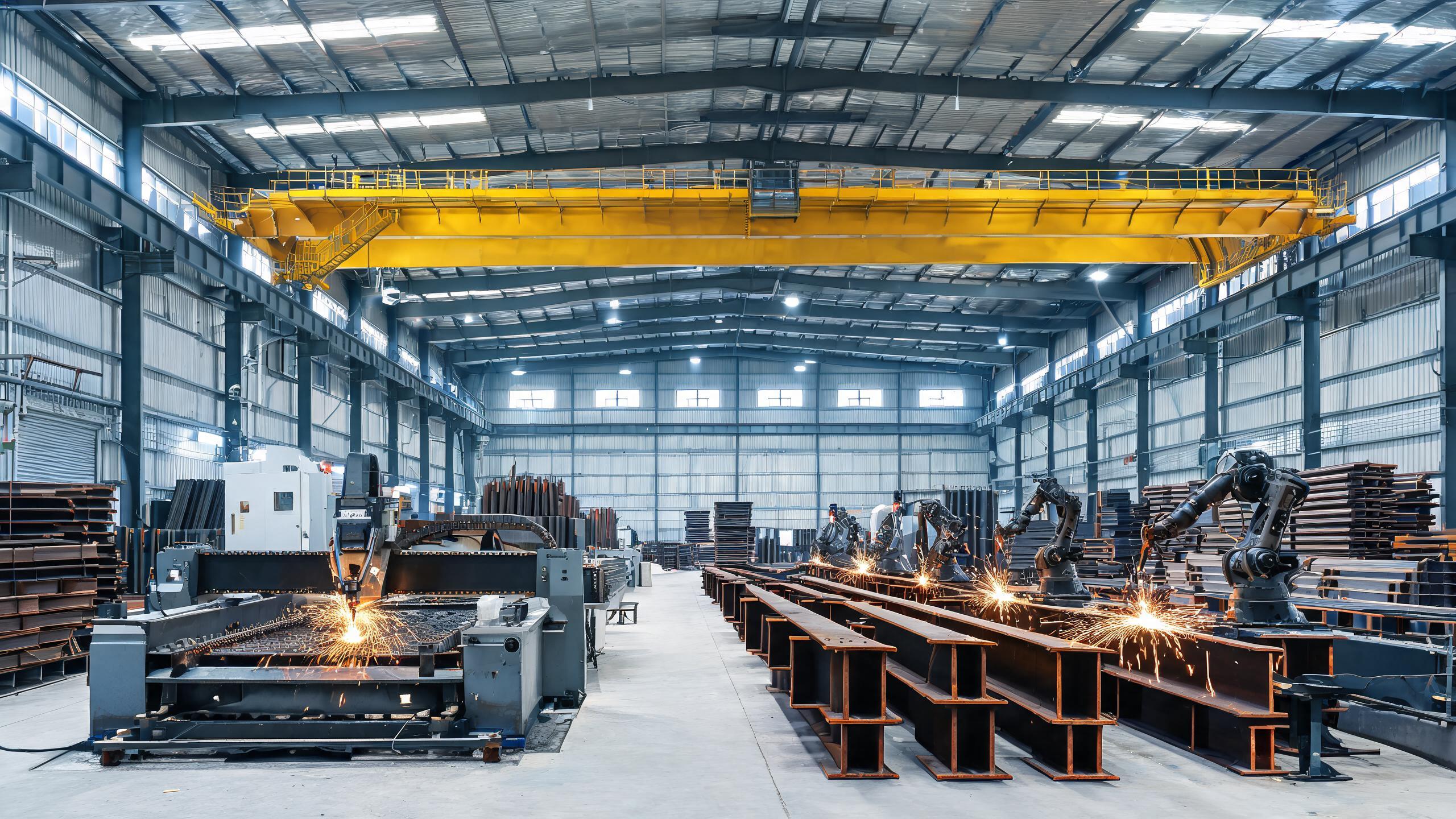
Jidian holds the China Steel Structure Manufacturing Special Level Qualification-the highest grade in China's fabricator classification. Welding procedures are qualified to ISO 15614-1, and all welders carry ISO 9606 certifications. For primary load-bearing welds, 100% of full-penetration butt welds undergo ultrasonic testing (UT) per GB/T 11345, with 10–20% radiographic testing (RT) spot checks and magnetic particle inspection (MT) on all fillet welds at fatigue-critical details. H-section columns and beams are fabricated on the cross-column production line imported from Germany and Italy. CNC plasma cutting ensures precision plate preparation. The AMADA secondary processing line from Japan ensures ±2mm bolt-hole positioning for straightforward on-site bolted assembly. The Italy Welding Procedure Qualification Certificate enables CE-marked components per EN 1090 for buyers requiring European compliance.
Packaging, Shipping, and Documentation for Livestock Projects
Steel components are bundled with steel straps and fabric-wrapped at ends to protect galvanized surfaces during transport. Small parts go in iron boxes labeled with part numbers. Standard shipments use 40ft OT or 40ft HQ containers from Xiamen port. A standard 1,000 m² livestock barn typically requires 3–5 containers. Shipping times: Middle East 18–28 days, Central Asia 20–35 days, Latin America West Coast 30–40 days, Southeast Asia 7–14 days, Africa 25–45 days. Trade terms: FOB Xiamen, CIF destination port, or DDP door delivery. Each shipment includes mill certificates, weld maps, UT/RT/MT NDT reports, coating thickness records, shop drawings, and structural calculation reports. Documentation in Spanish, Portuguese, or Arabic available on request.
Common Risks When Sourcing Metal Livestock Sheds
- Insufficient galvanizing thickness: Some manufacturers apply thin zinc coatings that fail prematurely in ammonia environments. Verify galvanizing meets ≥275g/m² per ISO 1461.
- Inadequate ventilation design: A metal shed without ventilation planning leads to heat stress and disease. Specify your climate zone and ventilation strategy. Jidian pre-engineers fan and cooling pad mounting points.
- Climate-specific design gaps: A shed designed for temperate climates may fail in extreme heat, cold, or humidity. Verify the manufacturer engineers for your specific climate data.
- Missing waste management integration: Slatted floors, scrape alleys, and pit access require structural support. Specify your waste management system during design.
- Poor bolt-hole positioning: Leads to assembly problems. Verify CNC drilling with ±2mm positioning accuracy.
FAQ
Q: What livestock types can your metal sheds accommodate?
A: Dairy and beef cattle, pigs (farrowing, nursery, grow-finish), poultry (broiler, layer, breeder), and multi-purpose agricultural use. Clear spans 12–30m accommodate various housing systems.
Q: Why is galvanized steel better than painted steel for livestock sheds?
A: Hot-dip galvanizing at ≥275g/m² per ISO 1461 provides 20+ years of protection in ammonia-rich environments. Painted steel typically corrodes within 3–5 years in farm environments.
Q: Can you engineer for extreme climates?
A: Yes. We design for Middle East extreme heat (up to 50°C), Central Asian cold (-30°C with 1.5 kN/m² snow load), tropical humidity in Latin America and Southeast Asia, and African arid/tropical conditions.
Q: What ventilation systems do you support?
A: Tunnel ventilation (exhaust fans + cooling pads), cross-flow ventilation (side wall curtains + ridge vents), and ridge ventilation. Fan mounting frames and cooling pad openings are pre-engineered into the structure.
Q: Can you integrate waste management systems?
A: Yes. The structure supports slatted floor loads, scrape alley scraper systems, and bedded pack configurations. Specify your system during inquiry.
Q: What biosecurity features are included?
A: Clean/dirty zone separation via internal partitions, smooth cleanable galvanized surfaces, rodent and bird exclusion screening at all openings.
Q: How long does fabrication and shipping take?
A: Fabrication 20–30 days for standard configurations. Shipping: 7–14 days to Southeast Asia, 18–28 days to Middle East, 30–48 days to Latin America, 25–45 days to Africa.
Q: Can the shed be expanded later?
A: Yes. Modular bay spacing (6–9m) allows future length extension by bolting on additional bays.
Q: What documentation is included?
A: Mill certificates, weld maps, UT/RT/MT NDT reports, coating thickness records, shop drawings, structural calculations, and assembly drawings. Available in English, Chinese, Spanish, Portuguese, or Arabic.
Q: Do you provide on-site supervision?
A: For barns above 1,000 m², we dispatch qualified engineers to supervise erection. Assembly drawings, videos, and remote support for all projects.