Steel Frame Commercial Buildings: A Guide for Developers and Investors
When a developer, investor, or corporate occupier plans a new commercial building, the search for prefab sports venue wholesale usually starts with a question about value: how do you build a multi-story structure that maximizes leasable floor area, adapts to different tenants, and still delivers on time and on budget? A steel frame commercial building answers that question. Jidian Construction Materials Co., Ltd. engineers and fabricates modern steel structure commercial buildings from its plant in Xiamen, Fujian, China, with 360,000 tons of annual steel capacity, the China Steel Structure Manufacturing Special Level Qualification, and 2,000+ completed projects across 50+ countries.
This guide is written for the developer or investor who has to evaluate the structural system against the business case. It covers how steel frames deliver flexible floor plates, how the column grid and floor loads work, how facades and curtain walls integrate, how services and HVAC are coordinated, and how to buy a commercial building from an overseas manufacturer without losing control of the project.
Why Steel Frames Suit Commercial Buildings
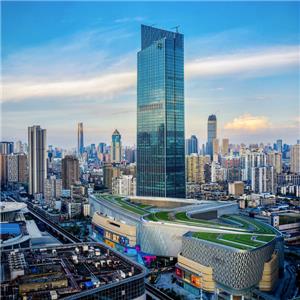
Commercial buildings are defined by the need for large, flexible, column-free floor plates that can be reconfigured as tenants change. Steel delivers this. A steel frame with H-section beams spanning 6-12m between columns and composite floor decks creates open floor plates that adapt to different layouts, from open-plan offices to cellular offices to retail. The result is a building that maximizes leasable area and retains its value as the market changes.
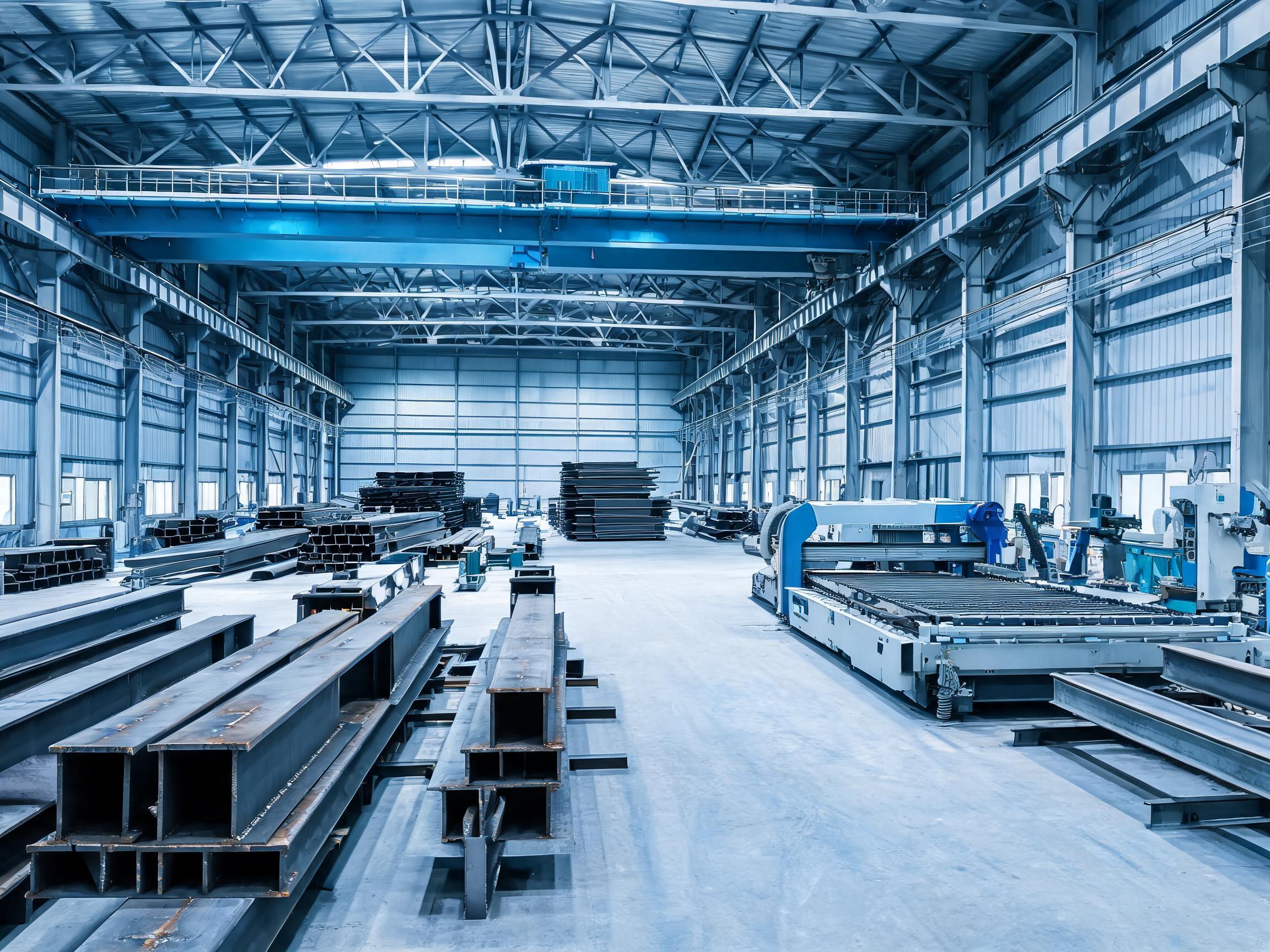
Steel also compresses the schedule, which matters for a developer with a financing window. Because components are pre-cut and pre-drilled to ±2mm tolerance on CNC plasma and automated SAW lines, a standard crew erects the frame in weeks rather than months, with no site welding teams required. The factory controls the quality of every cut, weld, and bolt hole, so the on-site work is assembly rather than fabrication. For a commercial building, where earlier occupancy means earlier rent, that schedule certainty is worth more than the steel itself.
Column Grid and Floor Plate Design
The column grid is the first decision in a commercial building, and it drives everything else. A grid that is too wide wastes steel on long-span beams that carry no load; a grid that is too narrow interrupts the floor plate with columns where tenants want open space. Jidian engineers the grid against your target floor plate, balancing the span against the floor load and the cost. H-section beams span 6-12m between columns, supporting composite floor decks with live load capacity up to 5 kN/m².
The floor plate is where the developer's value lives. A column-free plate of 6-12m spans lets tenants lay out offices, meeting rooms, and circulation without working around columns. The engineering team models the grid against your target plate, the floor loads, and the governing code, then sizes the beams and columns to carry the actual loads. The result is a floor plate that maximizes leasable area and minimizes the steel needed to carry it.
Multi-Story Frame Systems and Vertical Structure
Commercial buildings are multi-story, and the vertical structure is where the engineering gets interesting. Jidian builds multi-story steel frames using welded box columns fabricated on the European longitudinal box production line from Germany and Italy. Box columns carry the vertical loads and resist the lateral forces from wind and seismic, while H-section beams span between them to carry the floor decks. The frame is designed as a whole, so the columns, beams, and bracing work together to resist the loads.
The lateral system is critical in a multi-story building. Wind and seismic forces must be carried down to the foundation, and the engineering team designs the bracing or moment connections to resist them. The choice between braced frames and moment frames depends on the height, the loads, and the architectural requirements. The engineering team sizes the lateral system against the governing code for your site, whether GB 50009/50017, AASHTO LRFD, Eurocode EN 1991/1993, or BS 5400, and returns stamped calculations before production.
Floor Loads and Composite Decks
The floor system carries the building's occupants, furniture, and equipment, and its design is set by the live load. Offices need around 2.5-3 kN/m², storage and retail need around 5 kN/m², and process or equipment areas may need more. Jidian engineers composite floor decks with live load capacity up to 5 kN/m², supported on the steel frame. The composite deck acts with the steel beams to carry the load, reducing the beam size and the steel tonnage.
Getting the live load right at design stage prevents both an under-designed floor that cannot carry its intended load and an over-designed floor that wastes steel. The engineering team models the floor loads against your actual use, then sizes the deck and beams to carry them. The floor also affects the fire strategy, because an occupied upper level changes the compartmentation and escape routes, so it must be part of the structural and fire engineering from the start.
Facade and Curtain Wall Integration
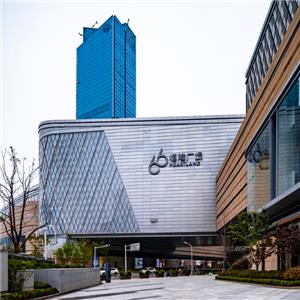
The facade is what makes a commercial building look like a commercial building, and it integrates with the steel frame. Jidian coordinates curtain wall and stone facade integration into the structural model, so the facade system is designed to attach to the frame rather than being an afterthought. The frame carries the facade loads, and the engineering team coordinates the mullions, the glazing, and the openings into the structural design.
The facade also affects the building's energy performance. Insulated panels, curtain wall glazing, and shading systems are chosen for the climate and the orientation, and the engineering team coordinates them into the structural model. The result is a building that looks right, performs well, and is structurally efficient. The facade is where the developer's brand and the building's value meet, so it is a design-stage conversation, not a retrofit.
Services, HVAC, and Vertical Circulation
A commercial building is a machine of services: HVAC, electrical, plumbing, fire protection, and vertical circulation. The steel frame carries these services, and the engineering team coordinates them into the structural model. The floor-to-floor height is set to accommodate the services above the ceiling, and the core, which houses the elevators, stairs, and risers, is engineered into the frame.
The core is the structural and functional heart of a commercial building. It carries the vertical circulation and the services, and it often provides the lateral stability. The engineering team sizes the core and coordinates the elevators, stairs, and risers into the structural design. The result is a building where the services are planned, not improvised, and where the structure carries them efficiently.
Wind, Snow, and Seismic Loads on Commercial Buildings
Commercial buildings are exposed structures, and the loads on them are significant. Wind design runs 0.5-0.6 kN/m² standard, upgradable to 1.0 kN/m² for coastal and typhoon regions; snow loads reach 1.5 kN/m² in mountain regions; and seismic detailing follows local requirements. The engineering team sizes the frame against the actual loads for your site, not a generic envelope, so you do not pay for steel that carries no load.
The lateral system is the most load-sensitive part of a commercial building. Wind and seismic forces must be resisted and carried down to the foundation, and the engineering team designs the bracing or moment connections to do it. The cladding is chosen for the environment: hot-dip galvanized primary steel at ≥275g/m² per ISO 1461 for humid or coastal sites, painted systems for dry inland locations, and thermal spray zinc for C4/C5 marine exposure. Specify the site honestly during inquiry, and the engineering team returns a structure that stands up to the local climate.
Quality Control and Documentation for Commercial Projects
Procurement lives on documentation, and a commercial building is a high-value project. Every Jidian shipment includes mill certificates, weld maps, UT/RT/MT NDT reports, coating thickness records, structural calculations, and assembly drawings. Welding procedures are qualified to ISO 15614-1, welders certified to ISO 9606, and 100% of full-penetration butt welds undergo ultrasonic testing per GB/T 11345. The Italian Welding Procedure Qualification Certificate enables CE-marked components per EN 1090 for European projects.
Quality control in steel fabrication is about verifiable evidence, not promises. A weld map lists every joint with its inspection status, so a third-party inspector can verify what was actually tested. Mill certificates document the chemical composition and mechanical properties of the steel. Coating thickness records prove the galvanizing or paint was applied to specification. For a commercial building, where the structure must last decades and support the developer's investment, this documentation is the difference between a supplier you can trust and one you cannot.
Logistics and Container Engineering from Xiamen
Engineering runs 5-10 working days free of charge; fabrication 25-30 days for a standard structure, with weekly photo updates; shipping from Xiamen runs 7-14 days to Southeast Asia, 18-28 days to the Middle East and Australia/New Zealand, 25-45 days to Africa, and 30-40 days to Latin America's west coast. A commercial building is a large structure, so the components are engineered to fit standard 40ft containers, with long members spliced at engineered locations. The container loading plan is provided with the quotation so your customs broker can pre-clear the shipment.
Logistics are engineered into the design, not left to chance. Component dimensions are checked against 40ft container envelopes, so long members either fit or are spliced at engineered joints. This container engineering is what makes a commercial building shippable at all, and it is a skill that separates experienced exporters from suppliers who discover the problem at the port. The components are bundled in erection sequence, with hardware in labeled iron boxes keyed to the drawings.
Erection and On-Site Assembly
Bolted design changes what erection support you need. Components arrive pre-cut and pre-drilled to ±2mm, so a standard crew erects the frame in weeks using standard equipment, with no site welding teams required. Jidian supports this with assembly drawings showing every piece mark, bolt specification, and connection sequence, plus connection videos for critical joints. For structures above 2,000 m², or projects with complex bracing, Jidian dispatches a qualified engineer to supervise erection.
Erection is where factory quality becomes visible on site. Because every component is pre-cut and pre-drilled, the frame bolts together without reaming or gas cutting, which is what allows a standard crew to erect the structure in weeks rather than months. The assembly drawings show the erection sequence, so the crew knows which members go up first and how the bracing is installed to keep the frame stable during construction. Every project receives scheduled remote support so questions are answered before they become delays.
Payment Terms and Trade Assurance
Jidian offers flexible trade terms to suit different procurement frameworks. FOB Xiamen, CIF destination port, or DDP door delivery are all available. Payment is by T/T (30% deposit, 70% before shipment) or L/C at sight, and Alibaba Trade Assurance is available for buyers who want platform-managed protection. The 30% deposit reserves your fabrication slot in the production schedule; the 70% balance before shipment releases the cargo after you receive the packing list and photos of the completed fabrication.
For large commercial projects, L/C at sight provides bank-level security for both parties. The letter of credit can be structured to release payment against shipping documents, including the mill test certificates, NDT reports, and packing list. Jidian's experience with international banking procedures means the L/C documentation is prepared to match your bank's requirements, avoiding the delays that occur when a supplier is unfamiliar with international trade finance.
Design-Build Workflow and Project Management
A steel commercial building project follows a clear workflow. It starts with the brief, where you provide the building type, number of floors, floor plate, site data, and design code. Jidian's engineering team returns 3D models and stamped calculations in 5-10 working days, free of charge. Once the design is approved, fabrication runs 25-30 days with weekly photo updates, then the components are shipped and erected on site. This design-build workflow keeps the project on a predictable schedule because the engineering, fabrication, and logistics are managed by one accountable manufacturer.
Project management is built into the package. The production schedule is protected by the factory's parallel capacity, so your fabrication slot is reserved against the plan. Weekly photo updates let your team track progress against the shipping window. The container loading plan is provided with the quotation so your customs broker can pre-clear the shipment. This end-to-end coordination is what separates a manufacturer that manages the whole project from a middleman that only sells components and leaves the coordination to you.
Choosing Between Suppliers: Questions That Reveal Capability
- May we see stamped calculations for a comparable building? A qualified manufacturer shows them; a broker cannot.
- What fabrication tolerance do you guarantee? ±2mm bolt-hole positioning is the standard that makes bolted erection possible.
- What welding evidence ships with the building? ISO 15614-1 procedures, ISO 9606 welder certificates, and 100% UT reports per GB/T 11345 on full-penetration butt welds.
- How is the price broken down? Tonnage, fabrication, enclosure, coating, packing-a lump sum cannot be audited or repriced when the developer changes the plan.
- Who supervises erection? Engineer on site above 2,000 m², drawings and videos for every project.
- Can the building adapt to future tenants? The column grid and floor loads are engineered for flexibility, so the floor plate adapts as tenants change.
Six questions, one afternoon, and the difference between manufacturers and middlemen becomes visible. Then the decision can rest on engineering rather than salesmanship.
FAQ
Q: How much does a steel frame commercial building cost?
A: Cost scales with tonnage, span, height, and cladding. Jidian provides a detailed breakdown including steel tonnage, fabrication, cladding, coating, and packing within 24 hours of design confirmation; factory-direct supply removes the 15-30% trading-company margin.
Q: What floor spans can a steel frame achieve?
A: H-section beams span 6-12m between columns, supporting composite floor decks with live load capacity up to 5 kN/m², creating flexible open floor plates.
Q: How many stories can a steel commercial building have?
A: Multi-story steel frames with welded box columns support commercial buildings of several stories, with the lateral system engineered to the height and loads.
Q: How long does a steel commercial building take to build?
A: Engineering 5-10 working days, fabrication 25-30 days, shipping 7-45 days by destination, and erection in weeks; the schedule is compressed because the structure is factory-fabricated.
Q: What design codes apply?
A: GB 50009/50017, AASHTO LRFD, Eurocode EN 1991/1993, or BS 5400 depending on your location, with stamped calculations provided free before production.
Q: What documentation supports our permit application?
A: Mill certificates, weld maps, UT/RT/MT NDT reports, coating thickness records, structural calculations, shop drawings, and assembly drawings; CE marking per EN 1090 where required.
Q: What about wind, snow, and seismic loads?
A: Wind design runs 0.5-0.6 kN/m² standard, upgradable to 1.0 kN/m² for coastal and typhoon regions; snow up to 1.5 kN/m²; seismic detailing to local requirements.
Q: Who builds the foundation?
A: Your local contractor, using the anchor bolt layouts, base reactions, and load schedules supplied free with the engineering package.
Q: Can our own crew erect it?
A: Yes-bolted ±2mm components assemble with standard crews using the supplied drawings and connection videos; engineer supervision is available for larger buildings.
Q: How do services and HVAC integrate?
A: The floor-to-floor height and the core are engineered to accommodate HVAC, electrical, plumbing, and vertical circulation, so the services are planned rather than improvised.