
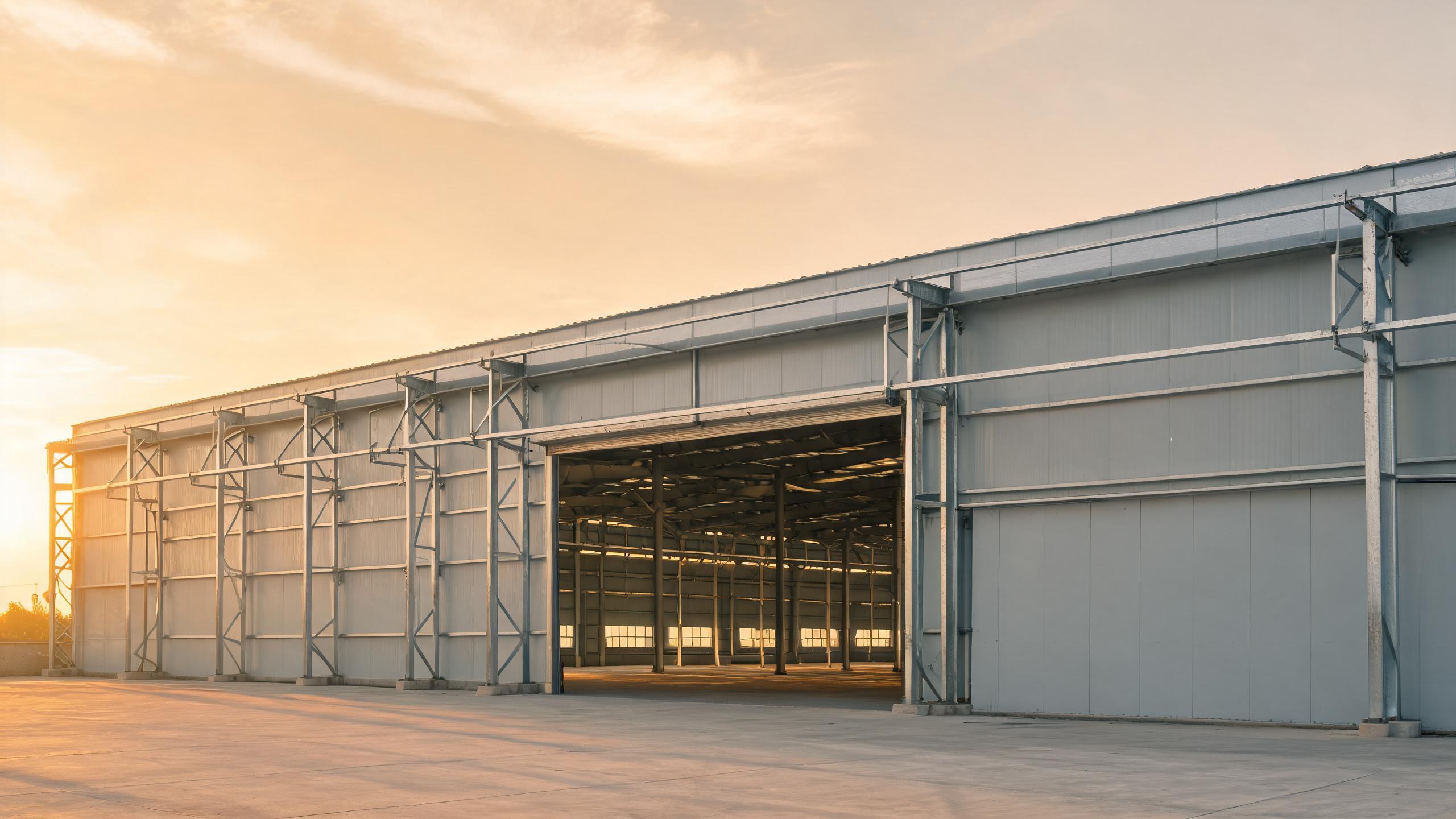
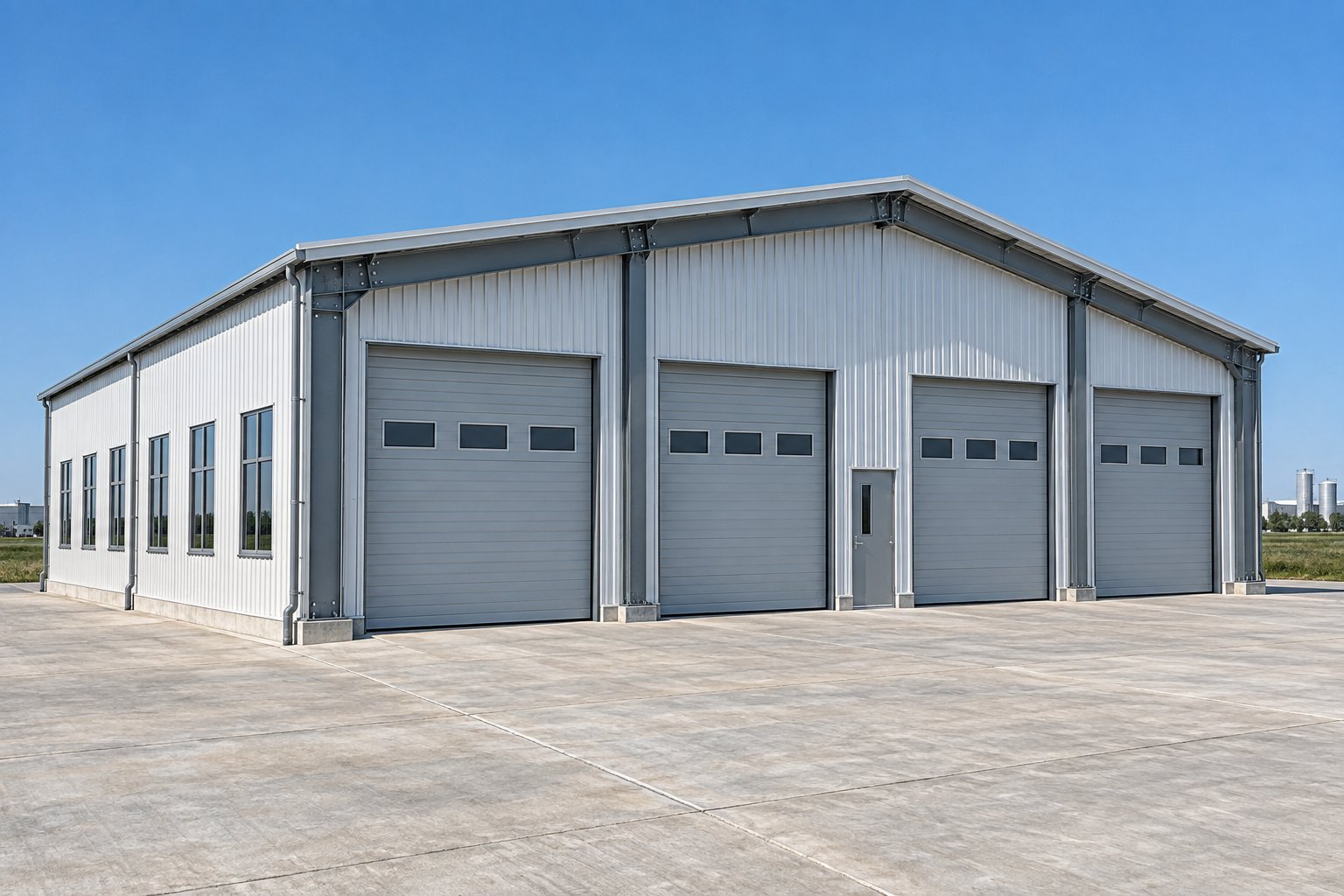
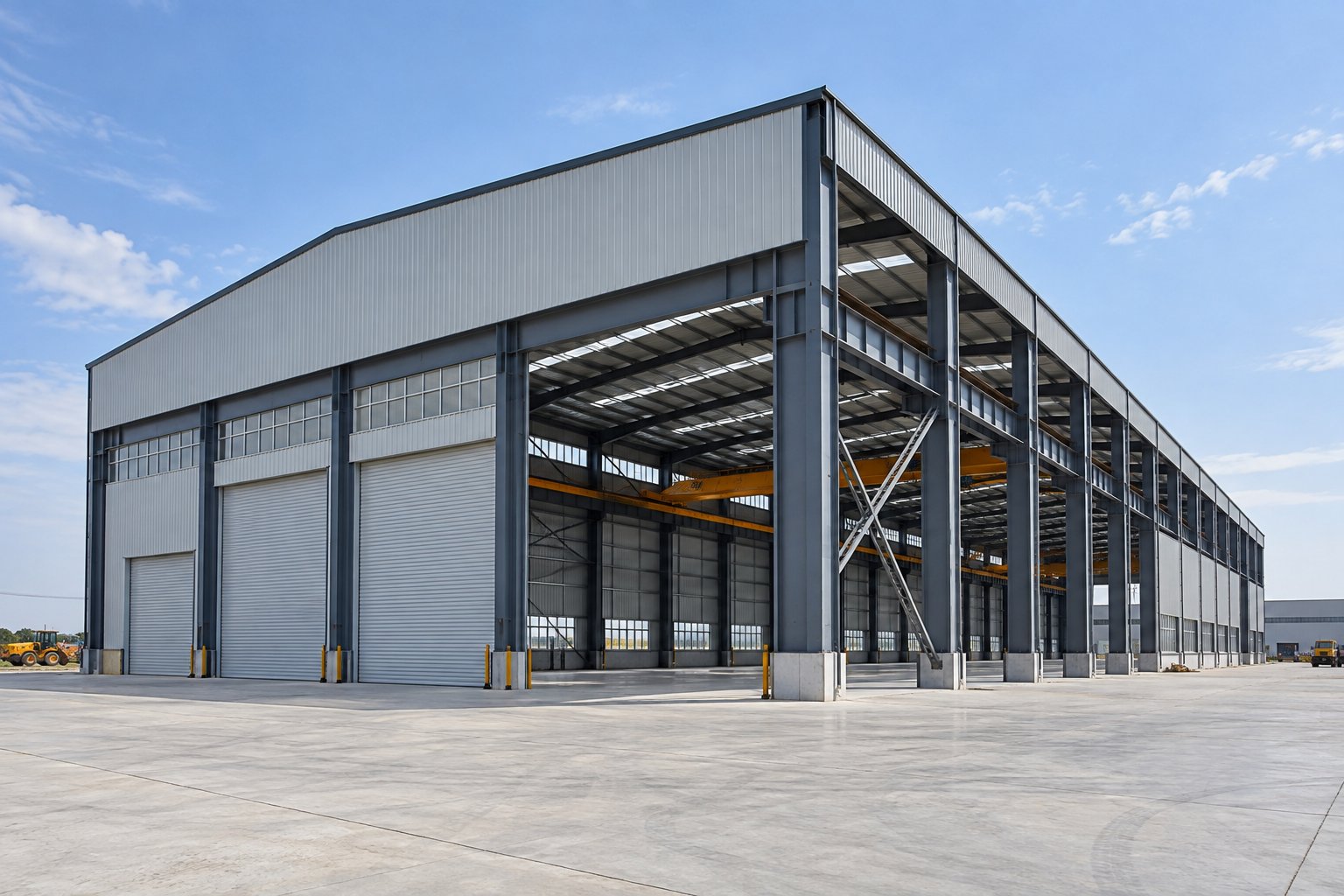
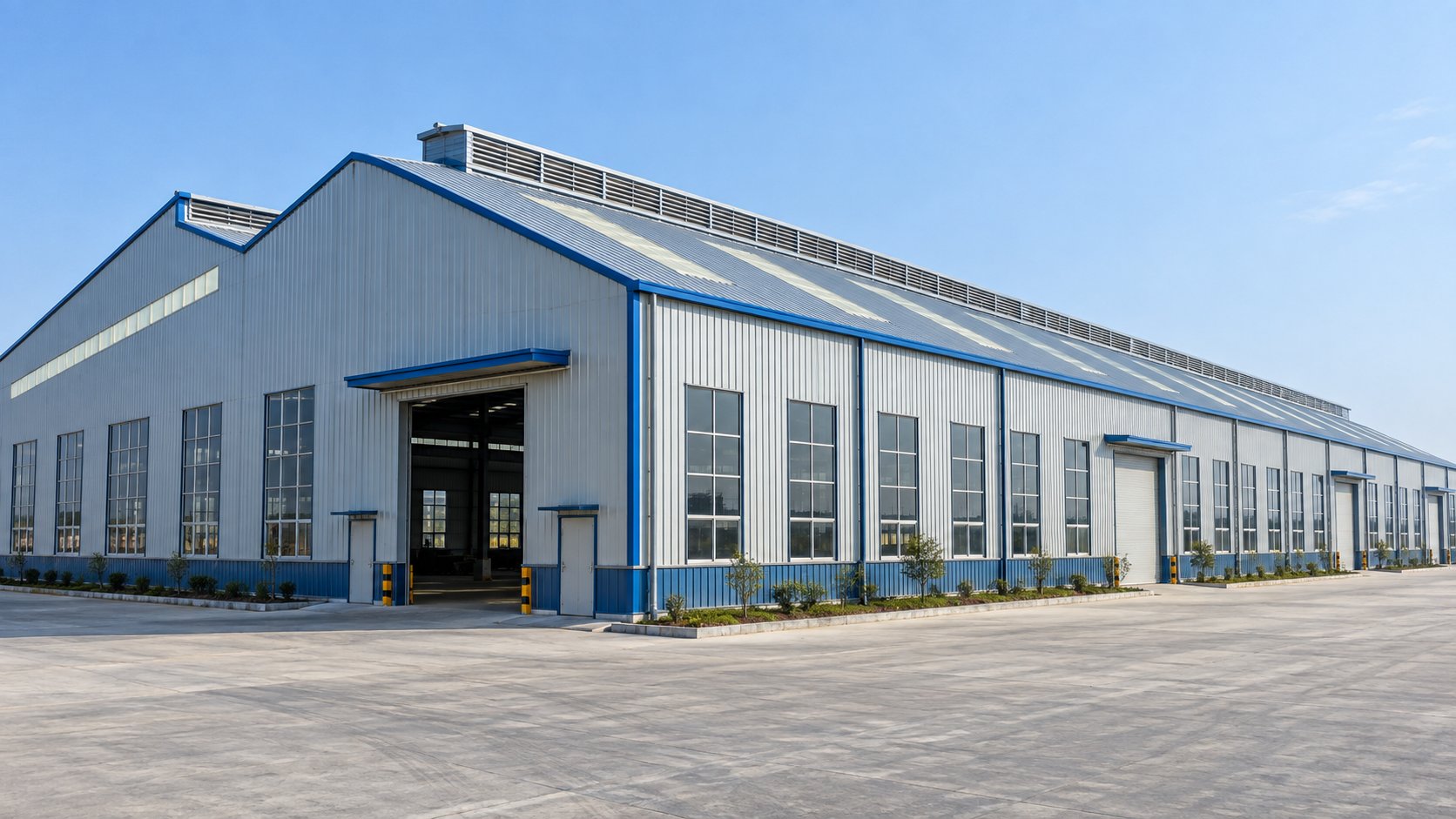
What a Prefabricated Steel Garage Delivers for Fleet Operations
For fleet managers, mining and construction contractors, and logistics operators searching peb manufacturer, the purchase is rarely about parking. A prefabricated steel garage is a maintenance asset: a building that keeps vehicles running, protects them from weather and theft, and gives technicians a controlled environment for inspection and repair. It succeeds or fails on details that are decided at design stage-door geometry for the largest vehicle, floor capacity for the heaviest axle, ventilation for running engines, and expansion for a fleet that will grow.
Jidian Construction Materials Co., Ltd. fabricates prefabricated steel structure garages from its 360,000-ton-per-year plant in Xiamen, Fujian, China, holding the China Steel Structure Manufacturing Special Level Qualification. Garage frames use Q345B/Q355B welded H-section portal frames spanning 15-36m, or lighter cold-formed frames for 12-24m single-bay buildings, fabricated on German, Italian, and Japanese production lines with ±2mm bolt-hole positioning and 100% UT weld inspection per GB/T 11345. This guide covers the decisions that determine whether the garage works for the fleet that occupies it: layout, doors, service equipment, floors, environment control, and growth.
| Garage User | Typical Fleet | Building Priorities |
|---|---|---|
| Logistics operator | Trucks and vans | Drive-through flow, dock doors, wash bay drainage |
| Construction contractor | Excavators, loaders, cranes | Clear span, heavy doors, workshop bays with lifts |
| Municipal or utility fleet | Mixed light and heavy vehicles | Zoned bays, parts storage, inspection pits |
| Agricultural operator | Tractors and implements | Wide doors, tall eaves, machinery-grade floors |
The rest of this guide follows those priorities in order, so the specification you send for quotation already reflects how the building will be used in year five, not just day one.
Single-Bay, Multi-Bay, and Drive-Through Layouts
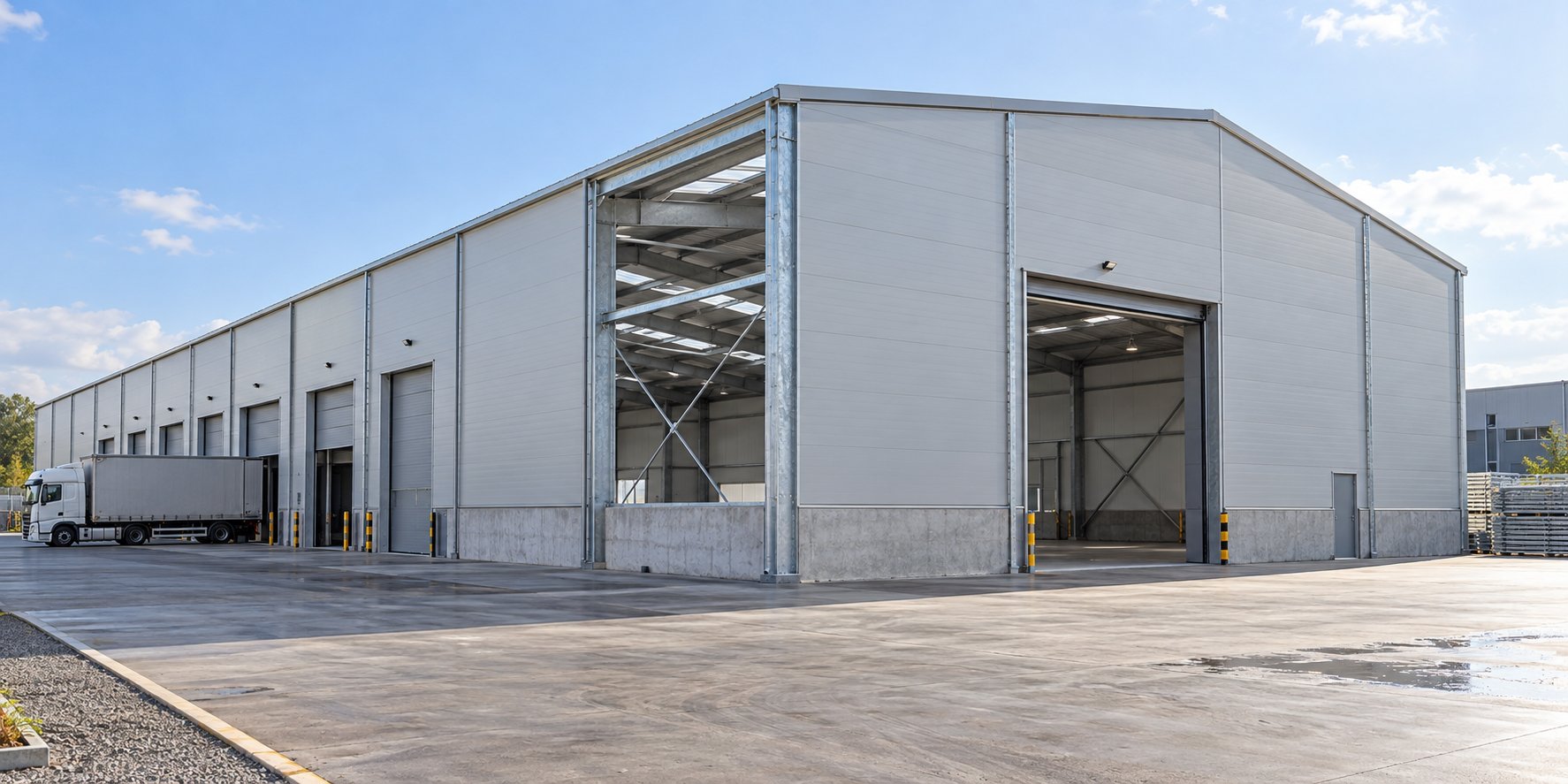
Garage layout follows circulation. Single-bay garages-one span, vehicles parked in a line-suit small fleets and shared facilities. Multi-bay layouts put two or three spans side by side with valley gutters between them, separating vehicle classes or dividing workshop from storage. Drive-through layouts place opposed doors at each end of every bay so vehicles never reverse into a working aisle; they cost one extra door line and save an accident per year in busy depots.
Bay geometry is set by the largest vehicle plus working clearance: a heavy truck needs a 5-6m wide door, 6-7m clear eave height with its body up, and 12-15m of bay depth for over-walk-around access. Portal frames spanning 15-36m keep the working floor column-free, and 6-9m frame spacing sets the module for doors and service pits. Decide the drive-through question early: it fixes door positions in the frame, and headers for vehicle doors are pre-engineered into the columns-position changes after fabrication mean new headers and re-cut cladding.
Sizing Bays for Vehicles, Lifts, and Working Space
Sizing is an exercise in honesty about the fleet. Count vehicles by class, then lay out each bay around its class: light vehicles on two-post lifts need 3.5m width per position; heavy trucks on floor jacks or column lifts need 6-8m; machinery bays for loaders and excavators need width for the widest transport configuration. Add circulation: aisles that technicians can walk while a vehicle is raised, space for toolboxes and parts trolleys, and a wash or fuel position with its own drainage. A bay that fits the vehicle but not the work is storage, not a garage.
The engineering data that drives steel weight is eave height and door size, not floor area. Raising eave height from 6m to 7.5m to accept tipper bodies adds column weight, cladding, and heating volume across every frame. Jidian's engineering team sizes each garage against the actual vehicle schedule you provide-free structural calculations and 3D models in 5-10 working days-so the frame matches the fleet rather than a round-number guess that is quietly wrong in both directions.
Vehicle Doors: Sectional, Roller, and Sliding Options
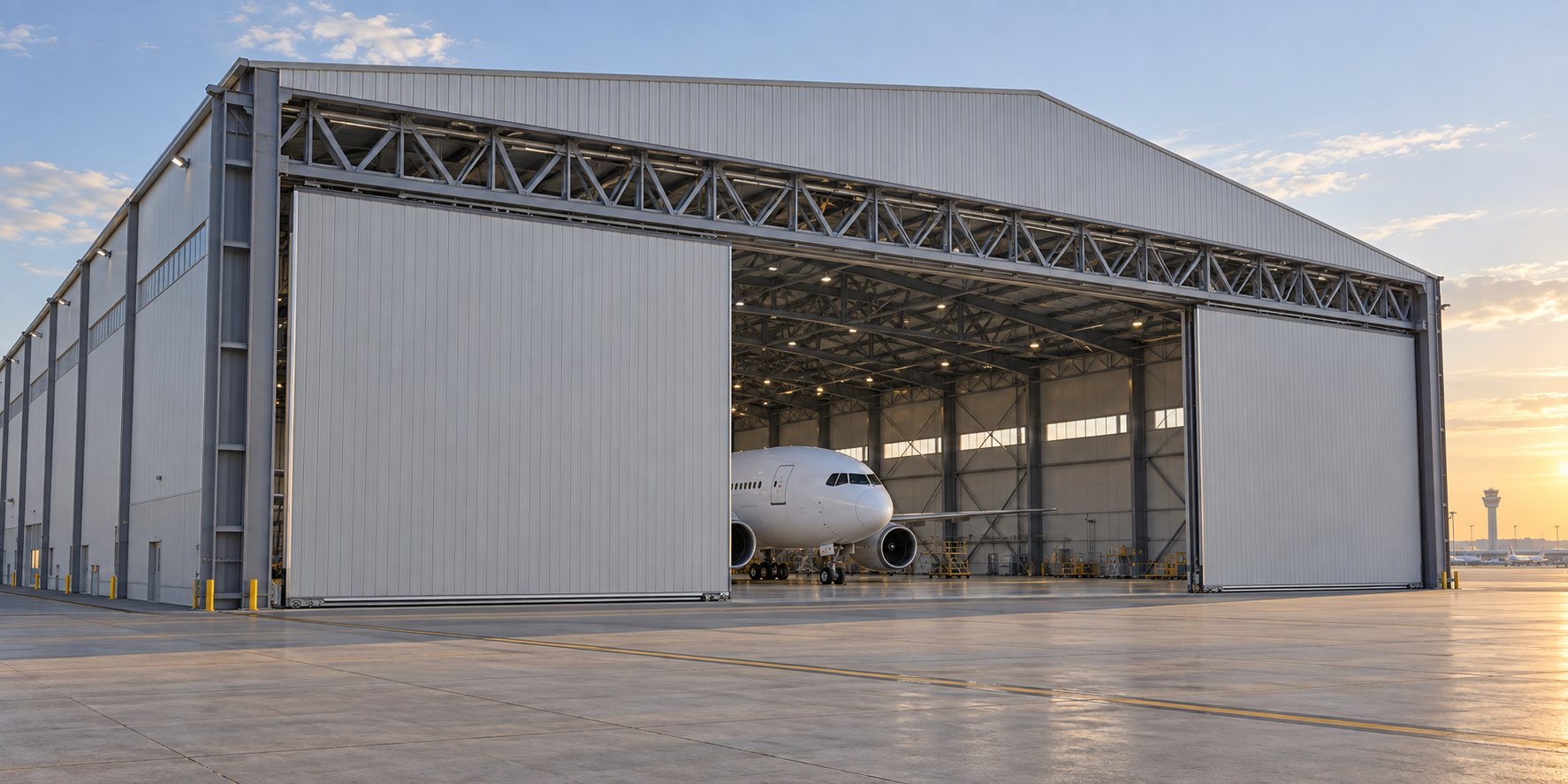
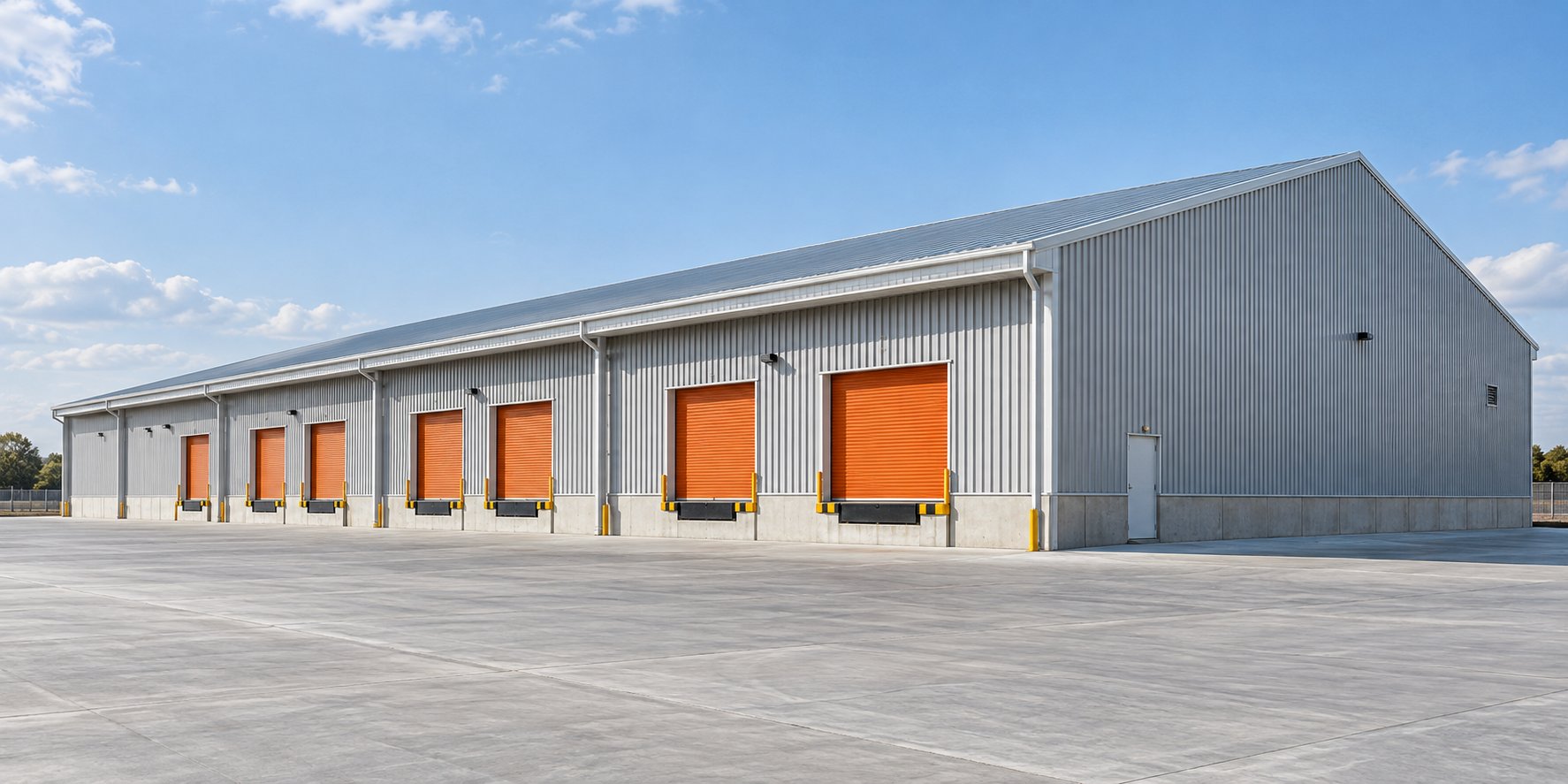
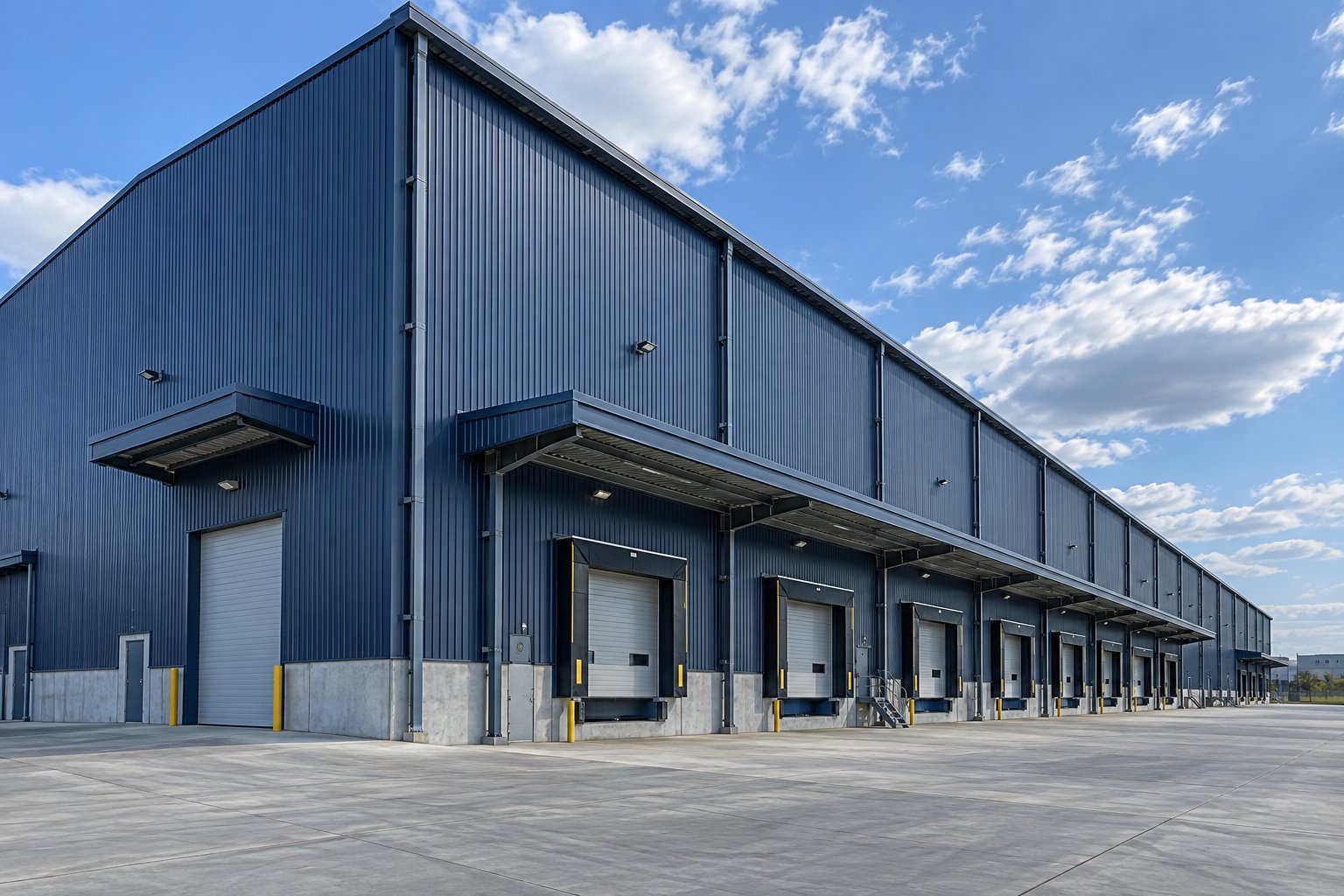
Doors are the most-used moving parts in a garage and the most common source of regret. Sectional overhead doors suit insulated garages in cold climates: they seal tightly, open fast, and tolerate high cycles. Roller shutters suit non-insulated bays and tight headroom. Sliding doors at 5-6m width accept machinery and trucks that exceed the practical size of rolling doors, and they cost less per square meter of opening. Insulated sectional doors belong on temperature-controlled wash and paint positions.
Every door opening is a structural opening: headers, jambs, and wind bracing around large openings are engineered into the frame, and the door track loads land on the steel. Specify door type and size per position at design freeze. Jidian pre-engineers the openings, and the assembly drawings show the mounting steel for each door position so the door contractor installs against real structure. A garage that must accept a 6m-wide sliding door for a mining truck cannot be value-engineered down to a 4.5m roller without becoming a different building.
Service Bays: Lifts, Inspection Pits, and Air Supply
Service equipment drives the building as much as vehicles do. Two-post and four-post vehicle lifts need level floors with anchor capacity per lift model; heavy column lifts impose concentrated loads at column positions. Inspection pits-trenches with access steps, lighting, and extraction-remain the fastest daily inspection position for trucks and buses; they are coordinated before foundation concrete because retrofitting a pit into a finished slab breaks the floor's joint system. Compressed air rings, oil and fluid distribution, and waste oil containment are layout-level services the floor plan must reserve space for from the first drawing.
Jidian's structural package includes the floor load schedule and interface drawings for pits and equipment foundations: base reactions, slab load cases, and pit wall details your civil contractor builds to. Heavy vehicle floors run 30-50 kN/m² with joint spacing designed for the vehicle spectrum; lift anchors are checked against the slab reinforcement drawings. Getting these interfaces on paper before concrete means the garage accepts its equipment without core drilling the brand-new floor.
Ventilation and Exhaust Extraction for Running Engines
Garages run engines indoors, and that sets ventilation requirements ordinary storage buildings never face. Vehicle exhaust-CO and NOx in light garages, diesel particulate in truck bays-must be captured at the tailpipe where vehicles run for more than brief movement, using hose reels or underfloor extraction connected to roof fans. General ventilation dilutes the rest: ridge vents with gable fans give continuous air changes, and louvered wall intakes complete the airflow path across the working floor. Wash bays and paint positions add humidity and solvent loads with their own extraction rates.
The steel frame accommodates this engineering: fan decks and duct supports are engineered into the roof design rather than bolted to purlins as an afterthought, and rooflight panels cutting 30-50% of lighting energy during work hours improve inspection quality at the same time. Specify the fleet's run patterns-daily warm-up, diagnostic runs, wash frequency-so ventilation is sized to the actual duty rather than a generic air-change number that undershoots on the coldest morning.
Garage Floors: Loads, Joints, and Finishes
The floor is the garage's most repaired component when it is under-designed. Heavy vehicle garages need 30-50 kN/m² live load capacity with joints spaced and reinforced for the vehicle spectrum; forklift and tug traffic adds its own joint loading. Finishes follow use: power-troweled concrete with hardener in traffic lanes, sealed concrete in parts storage, and coved, chemical-resistant coatings in fluid and battery areas. Falls and drainage belong in wash and fuel positions, with oil separation before discharge where regulation requires it.
Jidian supplies the floor engineering basis-load schedule, joint layout guidance, and pit details-while the civil contractor places the concrete. Steel frames are approximately 60% lighter than concrete equivalents, which cuts foundation concrete 25-40% and often decides feasibility on filled or marginal ground. The discipline that matters most: hold the floor pour until the garage's equipment schedule is final, because every lift, pit, and drain added after concrete is cut into the slab's structural logic.
Insulation, Heating, and Condensation Control
Garages in hot climates fight radiant heat; in cold climates they fight condensation. A single-skin steel garage roof in a humid climate drips on vehicles and toolboxes every morning; the fix is insulated sandwich panel construction-PU or rock wool panels at 50-100mm-which keeps the underside of the roof above dew point and lets a heated garage hold temperature. Rock wool panels add A1 fire rating per GB 8624 for bays where hot work or fuel handling occurs. In hot regions, insulated panels with ridge ventilation keep the working floor bearable without air conditioning.
Heated garages change the insulation arithmetic: every meter of eave height is heated volume, so tall machinery bays are sometimes zoned separately from heated workshop positions. Panel specification, ventilation, and heating loads are coordinated with the frame design, and Jidian's enclosure package-panel thickness, fastener and flashing schedules, rooflights-is specified against the climate data you provide. An honest climate brief at inquiry is what prevents the two classic garage failures: the cold-climate garage that sweats, and the hot-climate garage that bakes.
Security, Lighting, and Fire Safety in Garages
Garages concentrate valuable equipment and fuel, so security and fire design are structural decisions too. Personnel doors, alarm-friendly openings, and lighting levels are coordinated in the frame layout; high-bay LED lighting works with rooflight panels to cut both energy and shadow on inspection positions. Fire safety follows the fuel load: extinguisher points, hose reel positions, and where required, sprinkler zones for large enclosed fleets, all needing supports and penetrations reserved in the steel scope.
Compartmentation matters in multi-bay garages: rock wool panel walls divide workshop from storage positions and slow any fire long enough for suppression and evacuation. Jidian marks fire zone boundaries, equipment supports, and service penetrations on the assembly drawings so contractors install against real structure. None of this is exotic-it is coordination, done at design stage instead of by alteration orders after the first insurance survey.
Galvanized or Painted: Choosing the Garage Finish
Garage environments span dry inland sites to wash-bay humidity, and the finish should match the worst zone in the building:
| Finish System | Specification | Service Life | Best Garage Use |
|---|---|---|---|
| Hot-dip galvanized | ≥275g/m² per ISO 1461 | 20+ years | Open-sided shelters, humid and coastal sites, wash zones |
| Painted system | Zinc-rich primer + polyurethane topcoat | 15-20 years with touch-up | Dry inland sites, color-coded workshop interiors |
| Thermal spray zinc | Per ISO 12944 C4/C5 systems | 30+ years | Marine and heavy-industrial exposure |
Coating thickness records ship with the garage so maintenance planning starts from documented facts. Galvanizing carries higher upfront cost and lower life-cycle cost-a trade that usually wins in any garage that will be washed, hosed, or sited near salt air.
Extending the Garage Bay by Bay
Fleets grow; garages should too. Because garage frames repeat on 6-9m bays, extending the building means bolting additional bays to the end wall and relocating the end frame-an engineered modification, not a rebuild. Multi-bay garages extend sideways along the valley line when the site allows. The condition is planning: tell the engineering team the final target length and width at design stage, and the anchor layout, bracing scheme, and drainage are arranged so the extension is a weekend-scale project that does not disturb operations in the existing bays.
Expansion planning costs nothing at design and saves the most common garage regret: the building that cannot grow because its foundations, utilities, and door positions were all committed to phase-one only. Jidian's engineering team designs phase-one garages with documented expansion provisions in the calculation package, so the decision to extend later is based on drawings rather than demolition assessments.
From Order to Handover: Timeline, Shipping, and Erection
A prefabricated garage moves on a predictable schedule. Engineering-calculation report, 3D model, shop drawings-arrives within 5-10 working days of receiving your vehicle schedule and site data. Fabrication for a typical fleet garage occupies 20-30 days on Jidian's production lines. A 600-1,200 m² garage ships in 2-5 standard 40ft containers from Xiamen, with members bundled by erection sequence and hardware in labeled iron boxes keyed to the assembly drawings; sailing times run 7-14 days to Southeast Asia, 18-28 days to the Middle East and Australia/New Zealand, and 25-45 days to African and Latin American destinations.
Erection is bolted: components arrive pre-cut and pre-drilled to ±2mm, so a crew of 8-12 workers erects the frame in 10-15 days with standard equipment, guided by assembly drawings showing every piece mark, bolt specification, and connection sequence, with connection videos for critical joints. Larger garages and multi-bay layouts can receive engineer supervision of erection and final inspection. Trade terms FOB, CIF, or DDP; payment by T/T (30% deposit, 70% before shipment), L/C at sight, or Alibaba Trade Assurance. The result is a garage delivered as a system-engineered, documented, and ready for the fleet that justified it.
FAQ
Q: How many vehicles fit in one garage bay?
A: A 15-18m bay serves 3-4 truck positions or 5-6 light vehicle positions with working clearance; exact counts follow your vehicle schedule, which engineering reviews free of charge.
Q: Can the garage carry vehicle lifts?
A: Yes. Floors are engineered for 30-50 kN/m² with lift anchor positions checked against slab reinforcement, and pits are coordinated before foundation concrete.
Q: Can we get a drive-through layout?
A: Yes. Opposed doors at each bay end give drive-through flow; door headers are pre-engineered into the frames, so positions are fixed at design freeze.
Q: What door types suit heavy vehicles?
A: Sliding doors at 5-6m width for trucks and machinery; insulated sectional doors for heated or wash positions; roller shutters for non-insulated bays.
Q: How is engine exhaust handled?
A: Tailpipe extraction at running positions plus ridge and gable ventilation; fan and duct supports are engineered into the roof structure.
Q: Is insulation necessary in a hot climate?
A: Insulated panels prevent roof condensation and cut radiant heat; paired with ridge vents they keep working floors serviceable without air conditioning.
Q: Galvanized or painted-which should we choose?
A: Galvanized ≥275g/m² for humid, coastal, or washed garages; painted systems for dry inland sites where color matters.
Q: Can the garage be extended later?
A: Yes. Bays bolt on in 6-9m modules; declare the final target size at design stage and anchors, bracing, and drainage accommodate the extension.
Q: What is the delivery timeline?
A: Engineering 5-10 working days, fabrication 20-30 days, ocean freight 7-45 days by destination, erection 10-15 days with a local crew.
Q: What should the inquiry include?
A: Vehicle schedule with the largest unit's dimensions, door sizes, lift and pit requirements, site climate data, and target completion date.