How to Evaluate a Steel Building Manufacturer
When a procurement team, EPC contractor, or developer searches for prefab steel building manufacturers, the intent is supplier selection: they need to identify a fabricator that can deliver a complete steel building on schedule, to code, and with verifiable quality. Jidian Construction Materials Co., Ltd. is a steel structure manufacturer based in Xiamen, Fujian, China, with 360,000 tons of annual steel capacity and 1,000,000 m² of annual enclosure output. The company holds China's highest Steel Structure Manufacturing Special Level Qualification and participated in the formulation and review of China's national steel structure standards. With 2,000+ projects delivered across 50+ countries, Jidian is positioned to serve large-scale procurement programs.
This guide is written for the buyer who must choose a manufacturer rather than a middleman. We walk through the factory qualifications, production capacity, fabrication tolerance, quality documentation, engineering support, logistics, and commercial terms that separate a real manufacturer from a trading company. Every fact here comes from Jidian's actual production capabilities and delivered projects, so you can evaluate any supplier against a concrete checklist.
Factory Qualification and National Standards
The first thing to verify is whether the supplier is a licensed manufacturer with recognized qualifications. Jidian holds the China Steel Structure Manufacturing Special Level Qualification, the highest grade in China's fabricator classification. This qualification is not easy to obtain: it requires demonstrated production capacity, qualified welding procedures, and a track record of complex projects. The company also participated in the formulation and review of China's national steel structure standards, which means it helped write the very rules its own products must meet.
A manufacturer with a national-level qualification is accountable to a documented quality system, not just to a sales pitch. The qualification is backed by ISO 9001 certification, and the welding is qualified to ISO 15614-1 with welders certified to ISO 9606. For European projects, the Italian Welding Procedure Qualification Certificate enables CE-marked components per EN 1090. These credentials are verifiable: you can ask for the certificates, the qualification numbers, and the scope of each certification to confirm they cover the building type you need.
Production Capacity and Parallel Scheduling
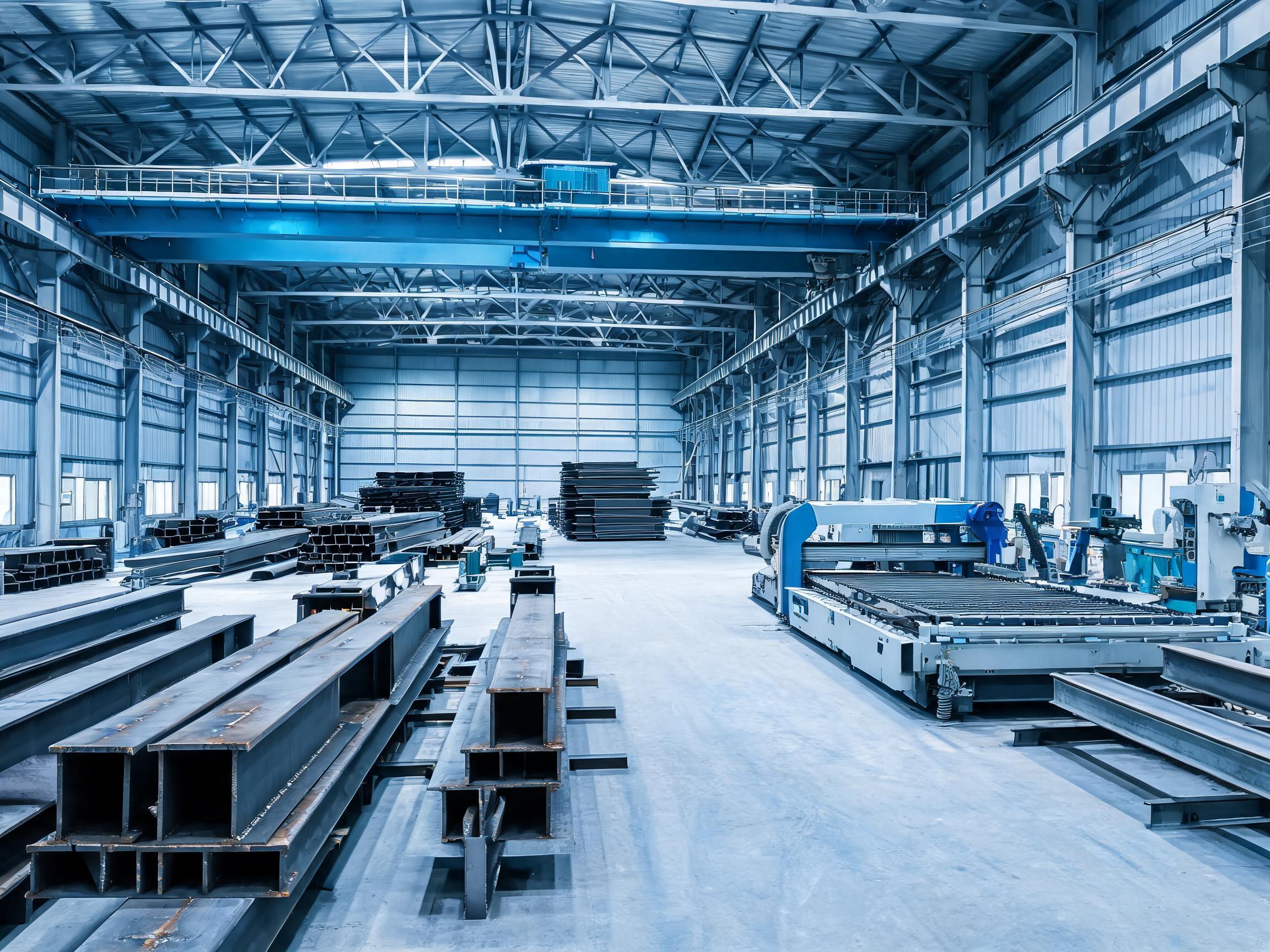
Capacity matters because it determines whether your project is queued behind others or fabricated in parallel. Jidian's 360,000 tons of annual steel capacity means the factory runs multiple projects simultaneously rather than lining them up one after another. This protects your fabrication slot against the production plan, so a delay in another project does not push yours back. For a large procurement program that needs several buildings delivered in sequence, this parallel capacity is a decisive advantage.
Capacity also affects lead time. A standard 1,500 m² building takes 25-30 days to fabricate, with weekly photo updates so your team can track progress against the shipping window. A supplier with limited capacity may quote a longer lead time or may rush your order to fit it in, which risks quality. Ask how many projects the factory is currently running and how your order fits into the schedule, and ask for the production plan in writing.
Fabrication Tolerance and Production Lines
The fabrication tolerance is the single most important technical number in steel building procurement. Jidian fabricates to ±2mm bolt-hole positioning, which is what makes bolted erection possible without reaming or gas cutting on site. This tolerance is achieved through automation: H-section columns and beams are fabricated on German and Italian production lines, CNC plasma cutting holds ±1mm, automated SAW welding produces consistent full-penetration welds, and the Japanese AMADA line drills bolt holes to ±2mm positioning.
Ask a supplier what tolerance they guarantee and how they achieve it. A supplier that relies on manual cutting and drilling will quote a looser tolerance, which means the crew on site must ream holes and gas-cut members to make the frame fit. That adds days to the erection schedule and introduces site-quality risk. The ±2mm tolerance is not a marketing number; it is the difference between a building that bolts together and one that is forced together.
Quality Control and Documentation Dossier
Quality control in steel fabrication is about verifiable evidence. Every Jidian shipment includes mill certificates, weld maps, UT/RT/MT NDT reports, coating thickness records, structural calculations, and assembly drawings. Welding procedures are qualified to ISO 15614-1, welders certified to ISO 9606, and 100% of full-penetration butt welds undergo ultrasonic testing per GB/T 11345. The Italian Welding Procedure Qualification Certificate enables CE-marked components per EN 1090 for European projects.
A weld map lists every joint with its inspection status, so a third-party inspector can verify what was actually tested. Mill certificates document the chemical composition and mechanical properties of the steel. Coating thickness records prove the galvanizing or paint was applied to specification. When a supplier produces this documentation for every shipment, it demonstrates a quality system that protects your project from hidden defects that surface years later. Ask to see a sample documentation dossier before you commit.
Engineering Support and Free Calculations
A manufacturer should provide engineering support as part of the package. Jidian's engineering team delivers 3D models and stamped calculation reports within 5-10 working days, free of charge before production. The structures are engineered to GB 50009/50017, AASHTO LRFD, Eurocode EN 1991/1993, or BS 5400 depending on your project location. This engineering depth is what turns a set of drawings into a building that meets your local code and passes inspection.
Ask whether the supplier provides stamped calculations, whether they are free, and how long they take. A middleman cannot provide stamped calculations because they do not employ engineers; they only resell components. A manufacturer that controls the engineering can optimize the frame against your actual loads, spans, and clearances, which saves steel and money. The free 3D model also lets your team and your local engineer review the design before fabrication begins.
Corrosion Protection and Enclosure Systems
The frame is only part of the building; the enclosure determines its life-cycle cost. Jidian hot-dip galvanizes primary steel at ≥275g/m² per ISO 1461 for humid or coastal sites, uses painted systems for dry inland locations, and applies thermal spray zinc for C4/C5 marine exposure. The 1,000,000 m² annual enclosure output means roof and wall panels are produced to match the frame, using insulated sandwich panels (PU/EPS 50-100mm, thermal conductivity 0.022-0.038 W/m·K).
The choice between galvanized and painted steel is a life-cycle decision. Galvanizing costs more upfront but protects for 20+ years without maintenance, while paint systems need repainting every 15-20 years in dry climates and far more often in humid or corrosive environments. Ask the supplier what corrosion protection they recommend for your site's environment and whether they can document the coating thickness.
Logistics and Container Engineering
International procurement depends on logistics. Jidian ships from Xiamen with transit times of 7-14 days to Southeast Asia, 18-28 days to the Middle East and Australia/New Zealand, 25-45 days to Africa, and 30-40 days to Latin America's west coast. A standard 1,500 m² building occupies 4-6 containers, with components bundled in erection sequence and hardware in labeled iron boxes keyed to the drawings.
Container engineering is a skill that separates experienced exporters from suppliers who discover the problem at the port. Component dimensions are checked against 40ft container envelopes (12m × 2.35m × 2.39m), so long members either fit or are spliced at engineered locations. The container loading plan is provided with the quotation so your customs broker can pre-clear the shipment. Ask the supplier whether they provide a container loading plan and whether the packing is keyed to the erection sequence.
Erection Support and On-Site Supervision
Bolted design changes what erection support you need. Components arrive pre-cut and pre-drilled to ±2mm, so a standard crew of 8-12 workers can erect a 1,500 m² building in 10-15 days using standard equipment, with no site welding teams required. Jidian supports this with assembly drawings showing every piece mark, bolt specification, and connection sequence, plus connection videos for critical joints. For structures above 2,000 m², or projects with heavy cranes and complex bracing, Jidian dispatches a qualified engineer to supervise erection.
Ask what erection support the supplier provides. A manufacturer that ships only components and leaves you to figure out the assembly is not providing a complete solution. The assembly drawings, connection videos, and scheduled remote support are what allow a local crew to erect the building correctly, and an on-site engineer for complex projects ensures the critical connections are made to the design.
Commercial Terms and Trade Assurance
Commercial terms matter as much as technical capability. Jidian offers FOB Xiamen, CIF destination port, or DDP door delivery, with payment by T/T (30% deposit, 70% before shipment) or L/C at sight, and Alibaba Trade Assurance for platform-managed protection. The 30% deposit reserves your fabrication slot; the 70% balance before shipment releases the cargo after you receive the packing list and photos of the completed fabrication.
For government projects or large EPC contracts, L/C at sight provides bank-level security for both parties. The letter of credit can be structured to release payment against shipping documents, including the mill test certificates, NDT reports, and packing list. Ask the supplier whether they are experienced with L/C documentation and whether they can provide Alibaba Trade Assurance, which gives you a platform-managed dispute resolution channel.
Project References and Track Record
A manufacturer's track record is the strongest evidence of capability. Jidian has delivered 2,000+ projects across 50+ countries, including industrial buildings, public buildings, long-span bridges, and ocean engineering projects. The company participated in the formulation and review of China's national steel structure standards and contributed to major engineering projects such as the 2022 Beijing Winter Olympics. Ask the supplier for project references in your building type and region, and verify the references with the clients if possible.
Project references matter because they demonstrate that the manufacturer has solved the specific problems your project will face. A supplier that has delivered similar buildings in your region understands the local codes, logistics, and erection conditions. Ask for case studies with real dimensions, steel tonnage, and delivery timelines, and check whether the manufacturer can provide contactable references. A manufacturer with a documented track record is accountable to its past performance in a way a new entrant is not.
After-Sales Service and Long-Term Support
After-sales service is what protects your investment after the building is erected. Jidian provides 24-hour customer service and efficient after-sales support, with a professional team that handles drawing design, steel structure manufacturing, and on-site construction. Ask the supplier what after-sales support they provide, how quickly they respond to issues, and whether they can supply spare parts or replacement components for the life of the building.
Long-term support matters because a steel building is a decades-long asset. The corrosion protection, the cladding, and the fasteners all need maintenance over time, and you want a supplier that can supply matching components and advice. Ask whether the manufacturer keeps fabrication records and drawings so they can supply replacement parts years later. A manufacturer that stands behind its buildings with documented after-sales support is a safer long-term partner than one that disappears after the shipment.
Supply Chain Transparency and Raw Material Sourcing
A manufacturer that controls its supply chain can guarantee the quality and traceability of the steel it uses. Jidian sources raw steel from qualified mills and documents each heat with a mill certificate that records the chemical composition and mechanical properties. The company's own inspection team controls all raw material quality, performs ultrasonic inspection of welds, and checks derusting grade detection. This supply chain transparency means you can trace the steel in your building back to its source.
Ask the supplier how they source raw material and whether they can provide mill certificates for each heat. A middleman that buys components from multiple factories cannot guarantee consistent quality or traceability. A manufacturer that controls its supply chain can document where every member came from and how it was tested. This traceability is essential for projects that require third-party inspection or that must meet strict quality standards.
Third-Party Inspection and Independent Verification
Independent verification is the strongest form of quality assurance. Jidian's products obtain ISO9001, CE, SGS, and BV certificates, and the company has its own inspection team that controls raw material quality, ultrasonic inspection of welds, and derusting grade detection. For projects that require third-party inspection, Jidian can arrange SGS or BV inspection before shipment, so an independent inspector verifies the fabrication against the specification.
Ask the supplier whether they can arrange third-party inspection and what the inspection covers. A manufacturer that welcomes independent inspection is confident in its quality; one that resists it may have something to hide. The inspection typically covers material certificates, weld quality, dimensions, and coating thickness. When the third-party report comes back clean, you have independent evidence that the building meets the specification, which protects your project and your reputation.
Communication and Collaboration
A manufacturer that communicates clearly is easier to work with across borders. Jidian assigns a dedicated project coordinator who manages the engineering, fabrication, and logistics, and keeps you informed with weekly photo updates and scheduled remote support. Ask the supplier how they communicate, how often they update you, and whether they have English-speaking staff who can answer technical questions. Clear communication prevents misunderstandings that cause delays and cost overruns.
Collaboration is especially important for a custom or complex building. The engineering team works with your local engineer to coordinate the foundation, the services, and the erection. The assembly drawings and connection videos are provided in a format your crew can use. Ask the supplier how they collaborate with your team and your local engineer, and whether they provide the documentation your project needs. A manufacturer that communicates and collaborates well is a partner, not just a vendor.
How to Compare Steel Building Manufacturers
When comparing manufacturers, build a scorecard around five dimensions: qualification and certification, production capacity and lead time, fabrication tolerance and quality documentation, engineering support, and commercial terms. Ask each supplier for stamped calculations, a sample documentation dossier, their production schedule, and their container loading plan. A manufacturer that answers with documents rather than adjectives is one you can trust to deliver a building that meets its code and passes inspection.
FAQ
Q: What qualifications should a steel building manufacturer hold?
A: Look for a national-level fabrication qualification, ISO 9001, and welding qualified to ISO 15614-1 with welders certified to ISO 9606. CE (EN 1090) for European projects.
Q: How much capacity should a manufacturer have?
A: Jidian has 360,000 tons of annual steel capacity, which allows parallel scheduling of multiple projects and protects your fabrication slot.
Q: What fabrication tolerance is achievable?
A: Jidian fabricates to ±2mm bolt-hole positioning on automated lines, which makes bolted erection possible without reaming or gas cutting.
Q: What documentation should ship with the building?
A: Mill certificates, weld maps, UT/RT/MT NDT reports, coating records, stamped calculations, and shop and assembly drawings.
Q: Does the manufacturer provide engineering support?
A: Yes. Jidian delivers 3D models and stamped calculations in 5-10 working days, free of charge before production.
Q: How long does fabrication take?
A: 25-30 days for a standard 1,500 m² building, with weekly photo updates and a reserved production slot.
Q: Can the manufacturer handle international shipping?
A: Yes. Jidian ships from Xiamen with container engineering, a loading plan, and transit times of 7-45 days depending on destination.
Q: What payment terms are available?
A: T/T (30% deposit, 70% before shipment), L/C at sight, and Alibaba Trade Assurance, with FOB, CIF, or DDP delivery.
Q: Does the manufacturer provide erection support?
A: Yes, with assembly drawings, connection videos, scheduled remote support, and an on-site engineer for complex projects.
Q: How do I verify a manufacturer is not a middleman?
A: Ask for stamped calculations, a sample documentation dossier, their production schedule, and their container loading plan. A middleman cannot provide these.